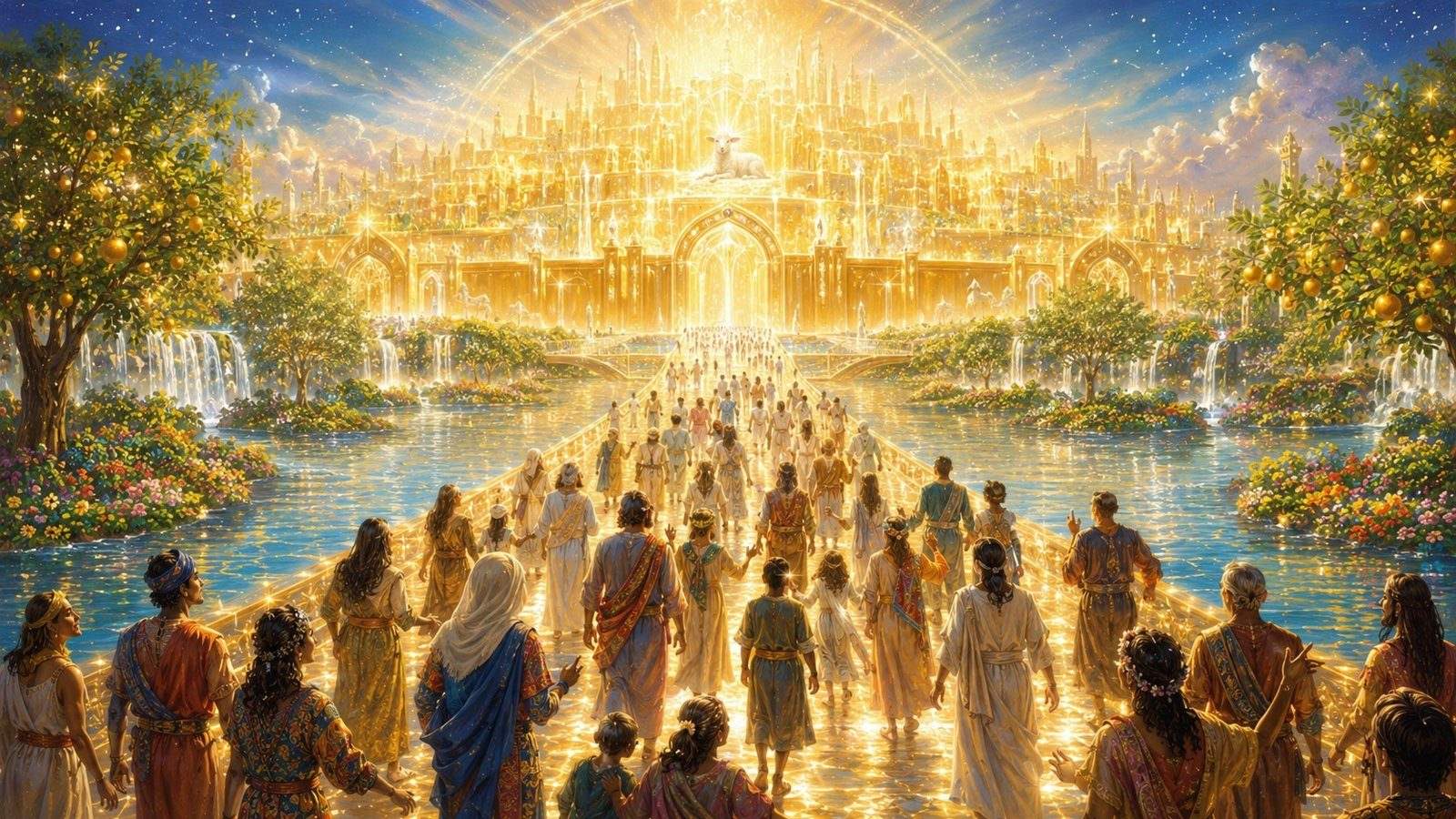
There is only one temple pattern in Scripture, but it appears again and again across history — as a tent in the wilderness, a permanent house in Jerusalem, the body of Jesus, your own body, and finally a city where there is no temple at all because God Himself is the temple.
How to use this guide: Study the biblical pattern, respond honestly to the questions, and then walk through the prayer practice. This is not a script to repeat mechanically. It is a pathway for letting the Holy Spirit lead you into worship through Jesus.
Central truth: Israel’s tabernacle was “inhale and exhale” on a national scale — the same pattern repeats through history because it was never a one-time building project. It is how a holy God dwells among an unholy people, in every age.
Temple Prayer
Bible Study
The Temple Timeline
The pattern shows up eight distinct times across Scripture, each one building on the last: the eternal Temple in heaven, Moses’ portable Tabernacle, David’s Tent, Solomon’s permanent Temple, Herod’s Temple in Jesus’ day, your own body as a temple of the Holy Spirit, a future Millennial Temple, and the New Jerusalem where God Himself is the temple.
Revelation 11:19
John sees the Temple of God opened in heaven, with the Ark of His covenant inside it — proof that the earthly Tabernacle was always a copy of something real and prior.
1 Chronicles 28:19
David received the pattern for Solomon’s Temple “in writing by His hand” — the same kind of direct blueprint Moses received centuries earlier.
John 2:19-21
When the Jews at the Temple demand a sign (John 2:18), Jesus answers, “Destroy this temple, and in three days I will raise it up” (John 2:19 AMP), speaking of His own body — the next physical “temple” in the timeline.
Revelation 21:22
In the New Jerusalem, John “saw no temple in the city, because the Lord God Almighty and the Lamb are its temple” — the pattern’s final destination.
1Moses’ Tabernacle was portable.
Built in the wilderness so God could dwell corporately with His people for the first time on earth — wherever the pillar of fire moved, the people moved.
2Solomon’s Temple was permanent.
David gathered the materials but was told his son would build it; at its dedication, God’s glory was so thick the priests could not minister (2 Chronicles 5:13–14; 7:1–2).
3Herod’s Temple was political.
Rebuilt and expanded by Herod the Great from about 20/19 B.C. and still under construction in Jesus’ day (John 2:20), it had lost much of the earlier glory — no pillar of fire, no regular miracles — which is part of why Jesus’ zeal for it was so striking.
4A future Temple is still coming.
Ezekiel 40–47 and Isaiah 2 describe a temple in Jerusalem when Jesus returns, where the Laver becomes a river and all nations come to honor the King.
Important distinction: This is not eight unrelated buildings. It is one pattern told eight ways — physical, then fulfilled in a Person, then living in you, then eternal. Seeing the whole timeline is what makes each individual station make sense later in this course.
Temple Prayer
Understanding the Station
Why the Timeline Matters
1
It proves the pattern isn’t arbitrary.
The same blueprint repeats across a thousand years of history and multiple authors — that is not coincidence.
2
It reframes the Old Testament.
Those chapters of measurements and materials are not filler. They are a detailed portrait of Jesus, painted centuries in advance.
3
It explains why Jesus loved the Temple.
As a twelve-year-old He asked, “Did you not know that I had to be in My Father’s house?” (Luke 2:49 AMP); later His zeal for His Father’s house drove Him to clear it (John 2).
4
It relocates the Temple into you.
Once Jesus’ body became the temple and was raised, believers became the next living temple — “the Spirit of God dwells in you” (1 Corinthians 3:16).
5
It looks forward, not just backward.
The pattern isn’t finished. A future Temple and the New Jerusalem are still ahead, in the same line as everything you’re studying now.
Jesus in every era of the Temple
Herod’s Temple
John 2:16-22
He calls His own body the true Temple.
The Church
1 Corinthians 3:16
Believers become the living temple.
New Jerusalem
Revelation 21:22
He is the Temple — no building needed.
Further study: Read and mark: Exodus 25:8-9; Ezekiel 40-47; Isaiah 2; Hebrews 8:5; 1 Peter 2:9.
Temple Prayer connection: Whenever a later class feels like “just history,” come back to this timeline. Every station you study is one frame of a much longer film that started before Eden and ends in the New Jerusalem.
Temple Prayer
Study, Understand & Respond
Personal Worksheet
Which era of the Temple timeline was most new to you — Moses’ Tabernacle, David’s Tent, Solomon’s Temple, Herod’s Temple, or the future Temple?
Revelation 21:22 says the New Jerusalem has no temple “because the Lord God Almighty and the Lamb are its temple.” What does it change to know that’s where all of this is heading?
1 Chronicles 28:19 says David received the pattern “in writing.” Why do you think God was that specific and detailed about something as ordinary as furniture and measurements?
Jesus called Herod’s Temple “My Father’s house” even though it had lost much of its earlier glory. Where do you still show up faithfully even when the “glory” feels diminished?
1 Corinthians 3:16 says you are the temple of God right now. Does your daily life reflect that you believe this, or mostly forget it?
What is one thing you’ll look for differently the next time you read an Old Testament passage about the Tabernacle or Temple?
If someone asked you to explain “why does the Temple matter?” in two sentences, what would you say after this class?
Temple Prayer
Prayer Practice
Praying Through the Timeline
Move slowly. Pause after each step. Let the Holy Spirit bring specific people, memories, Scriptures, and responses to mind.
1
Thank God for the whole story.
He has been showing you Jesus since before the wilderness — thank Him for a pattern this consistent and this old.
2
Remember you are a living temple.
Say it out loud: “My body is the temple of the Holy Spirit” — let that settle in as identity, not just information.
3
Ask for eyes to see the pattern.
Ask the Holy Spirit to help you notice the Temple thread the next time you’re reading anywhere in Scripture.
4
Look forward, not just back.
Thank God that the story isn’t finished — a future Temple and the New Jerusalem are still ahead.
5
Pray for someone who needs the whole picture.
Ask God to open someone else’s eyes to see Jesus as the point of the whole Bible, not just isolated verses.
6
Rest in the destination.
Sit for a moment in Revelation 21:22’s picture — no temple needed, because God Himself is there.
What I sensed the Holy Spirit emphasizing:
My declaration for this week: Because the whole Bible tells one Temple story, I will
Seven-day practice:
Read Revelation 21:22-27 once this week and picture the ending of the story.
Notice one Old Testament passage this week you would have skimmed past before this class.
Tell someone the “one pattern, four thousand years” idea in your own words.
Thank God once a day that your body is currently His temple.
Next Station: The Value of Temple Worship — Why This Pattern, Why Now