Primary passages: Revelation 21:22–23; Revelation 22.
The city comes down
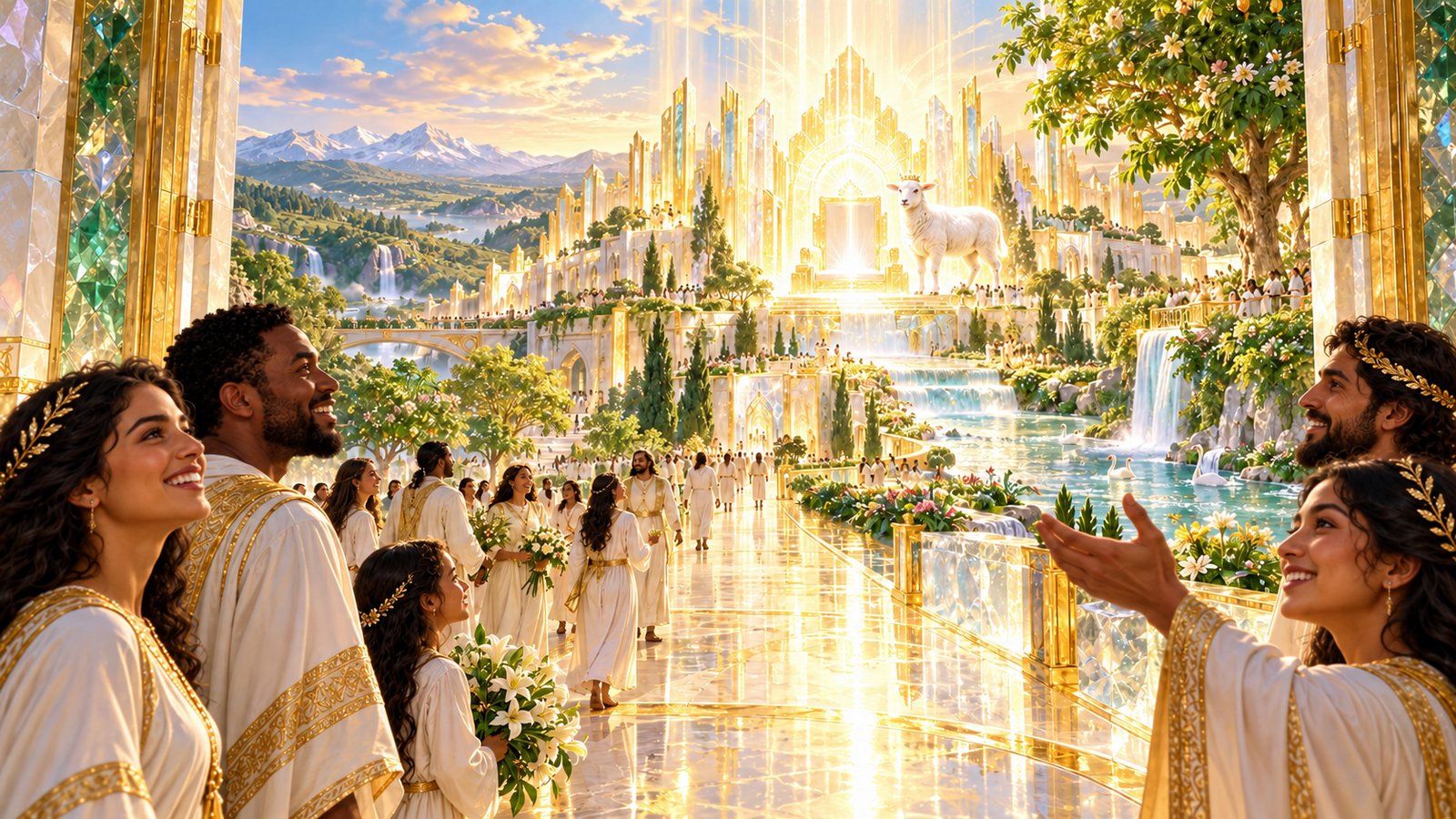
John sees a new heaven and a new earth. Then he sees the holy city, New Jerusalem, coming down out of heaven from God, prepared as a bride for her husband. The story does not end with humanity finally constructing a sanctuary worthy of God. It ends with God bringing His dwelling to His redeemed people.
“I saw no temple in it, for the Lord God the Almighty and the Lamb are its temple.” — Revelation 21:22, World English Bible
That sentence brings our forty-chapter journey to its destination. From Eden’s garden to Israel’s sanctuaries, from Jesus’ body to the Spirit-indwelt Church, the question has been where and how people may meet with the holy God. Now no separate sanctuary building mediates the city’s life. God Almighty and the Lamb are its temple. His presence is its joy, and His throne is its government.
22I saw no temple in it, for the Lord God the Almighty and the Lamb are its temple.
23The city has no need for the sun or moon to shine, for the very glory of God illuminated it and its lamp is the Lamb.
Beyond the millennium: The final enemy is gone
In the premillennial reading followed in this series, Revelation 20’s thousand-year reign precedes the final rebellion and judgment, followed by the new creation of chapters 21–22. The Millennial Temple discussed in the previous chapter and the New Jerusalem therefore belong to distinct stages in that framework. Ezekiel describes a sanctuary; John explicitly describes a city without one.
The final vision does not leave evil waiting to return. Satan has been judged; death and Hades have been cast into the lake of fire. God’s people are not entering a brief pause before the next invasion. The conflict that has scarred the Temple story will not begin again.
The prophets’ promises reach toward this city
Daniel 7:13–14 presents one like a son of man receiving an everlasting dominion over peoples, nations, and languages. Daniel 12:2–3 speaks of resurrection and enduring life. Revelation’s final chapters bring those themes together in the victory of the Lamb and the everlasting life of His people. The prophetic hope is greater than the survival of a nation or the restoration of a building: God’s kingdom outlasts death.
Isaiah 2:2–4 shows nations coming to learn God’s ways, and Isaiah 4:2–6 shows a cleansed remnant, divine glory, and shelter over Zion. Revelation 21 similarly depicts nations walking in God’s light and a holy city from which defilement is excluded. These are connected themes of holiness, presence, and the nations’ worship, not a reason to collapse every prophetic scene into a single architectural plan.
Zechariah 13 promises cleansing and portrays a people refined to call upon the Lord; Zechariah 14 portrays the Lord as King over all the earth and holiness reaching into ordinary life. Those promises help us recognize the direction of the story. Yet Zechariah’s descriptions of annual pilgrimage, withheld rain, and punishment should not be transferred indiscriminately into Revelation’s city, where death and the curse are gone. We honor Scripture by noticing both continuity and difference.
Eden’s loss is answered
Genesis introduces the tree of life and a river in the garden. After rebellion, humanity is excluded from access to the tree. Revelation 22 shows the river of life proceeding from the throne of God and the Lamb, with the tree of life bearing fruit and leaves for the healing of the nations. The curse no longer governs human existence.
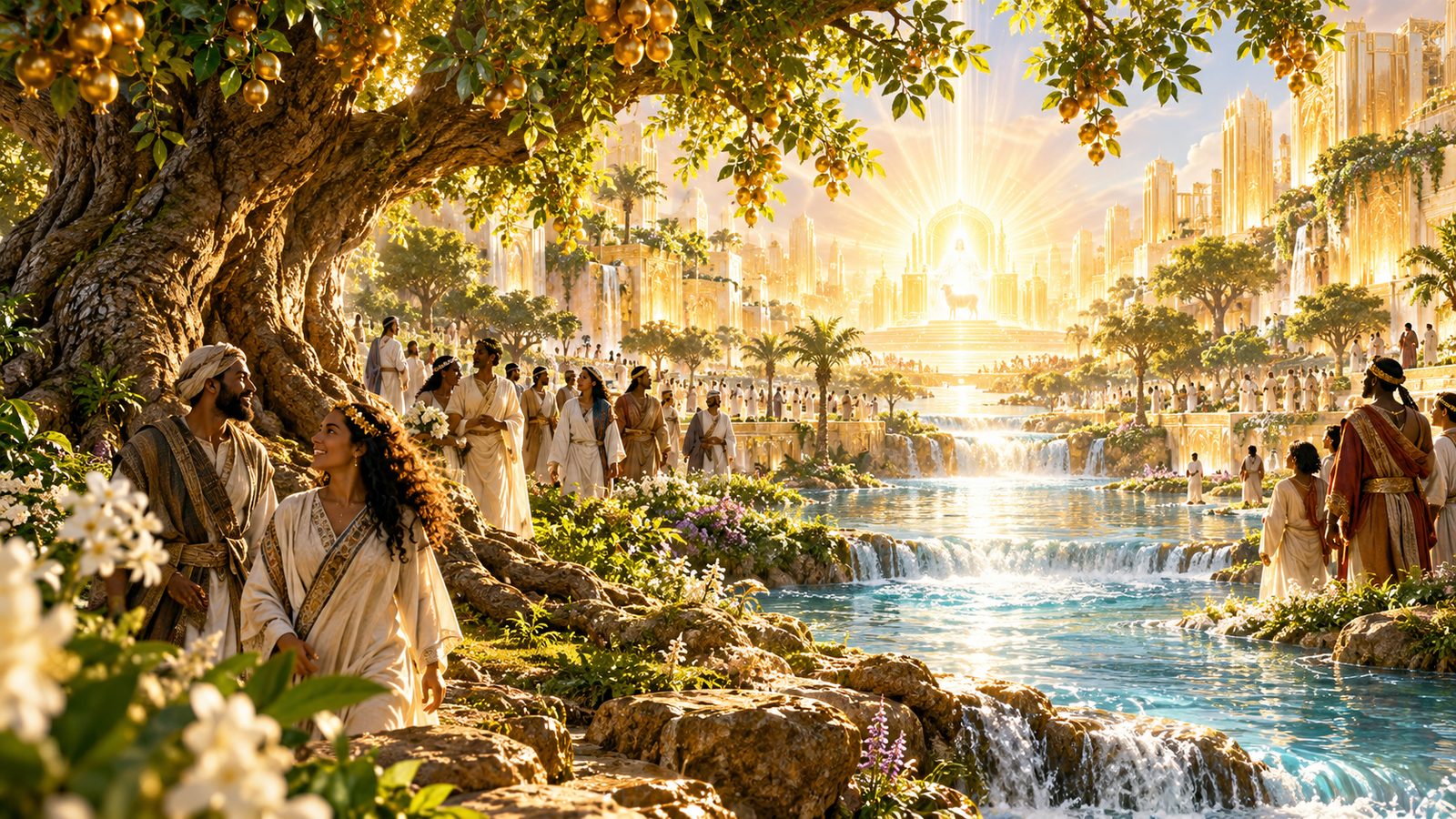
This is restoration through redemption, not a return to innocence as though sin had never occurred. The Lamb remains central. The crucified and risen Jesus is not a temporary solution left behind when the city arrives. His victory makes this dwelling possible.
A city shaped like the inner sanctuary
Revelation describes the city’s length, width, and height as equal. This recalls the cubic inner sanctuary of Solomon’s Temple (1 Kings 6:20). The correspondence suggests the holiness once associated with the innermost room extending to the life of the whole city. It is a powerful temple connection, though John does not explicitly call the entire city “the Holy of Holies.”
Precious stones, gates, gold, and light convey the magnificence of God’s dwelling. Christian interpreters differ over the relationship between the vision’s symbolism and its physical dimensions. The certainty is not dependent on our ability to turn the passage into an engineering drawing: God’s promise is a real, holy, glorious dwelling with His redeemed people.
Israel and the apostles belong in the same city
The gates bear the names of Israel’s twelve tribes. The foundations bear the names of the Lamb’s twelve apostles. The city’s identity remembers both Israel’s covenant history and the apostolic witness to Jesus. The gospel has not required God to erase the story through which He brought the Messiah.
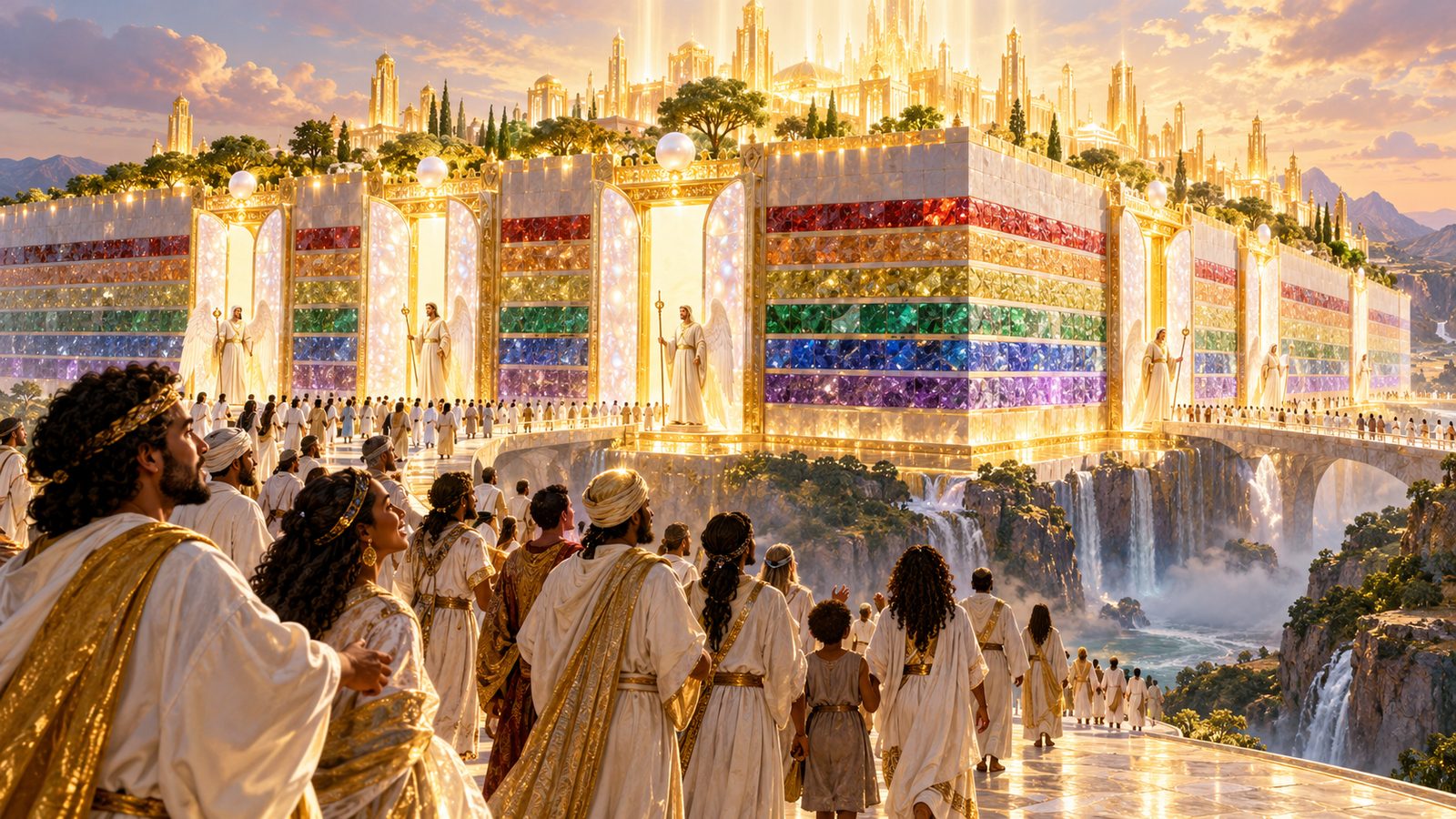
At the same time, the nations walk in the city’s light and bring their glory into it. The redeemed are united around the Lamb rather than arranged into competing routes of salvation. Israel’s story and the Church’s story meet in the faithfulness of the same God, whose salvation reaches the nations through Jesus.
God’s government remains at the center
Revelation 22 places the throne of God and the Lamb at the center of the city’s life. His servants serve Him, see His face, and reign forever. God’s nearness does not mean His authority disappears. Perfect fellowship includes perfect, willing obedience.
Across the series, false kings have tried to control worship, priests have neglected their calling, and nations have fought over Jerusalem. Here the throne is unchallenged and His servants are faithful. The purpose of redeemed authority is no longer corrupted by rivalry, exploitation, or rebellion. The King who governs His people is also the Lamb who gave Himself for them.
They will see His face
In earlier sanctuaries, access was restricted and holiness could not be approached casually. In Revelation 22:4, God’s servants see His face, and His name marks them as His own. The promise is personal communion, secure belonging, and unhindered service.
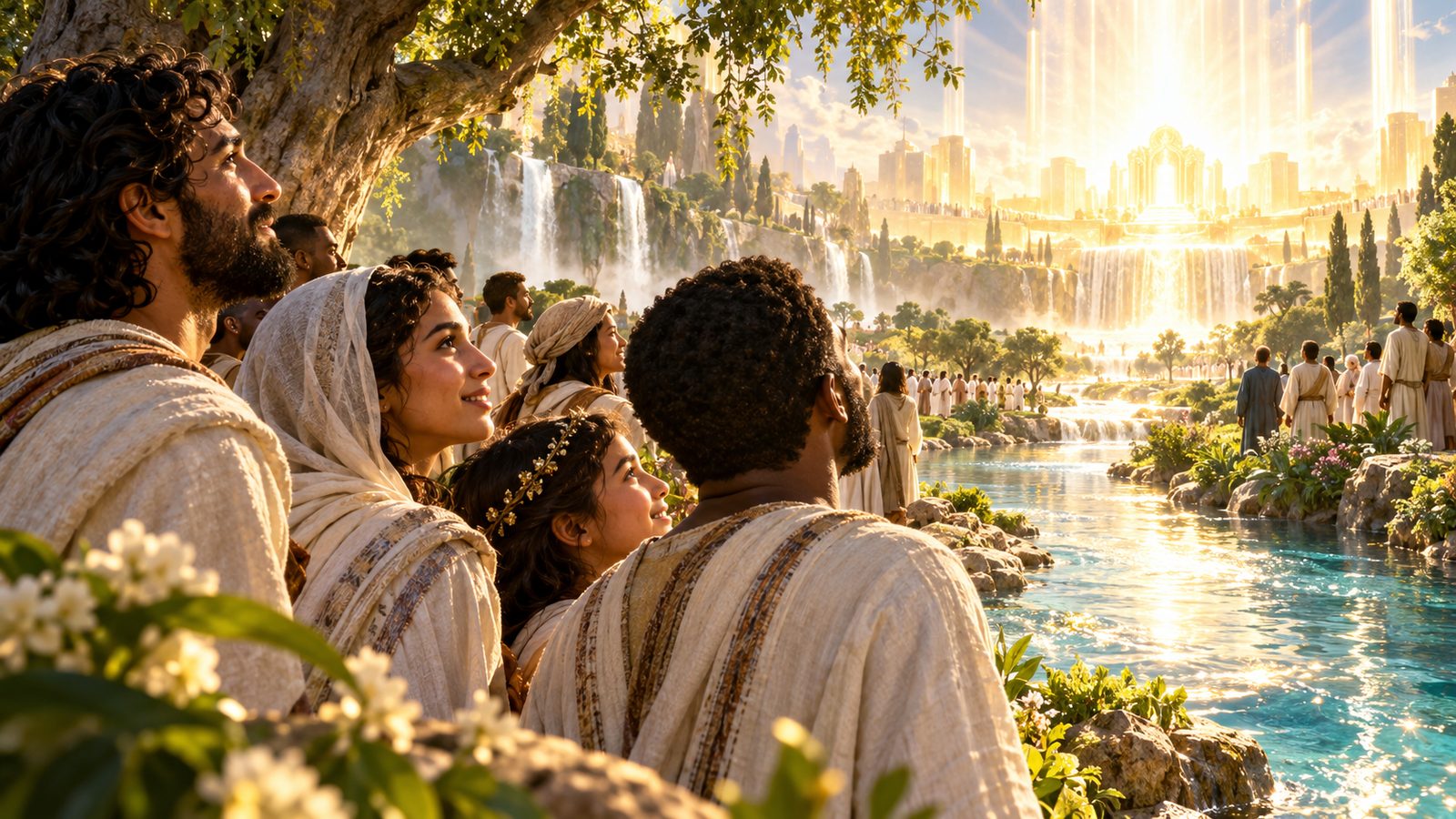
This does not mean we outgrow Jesus or dispense with Him as our Mediator. The Lamb is eternally central. The redemption He accomplished brings His people into the fullness of the fellowship for which they were made.
What happens to the Temple pattern?
The pattern reaches its fulfillment in the Lord Himself. Revelation explicitly names God and the Lamb as the temple and the Lamb as the city’s lamp. Other connections can help us reflect: the throne recalls the sanctuary’s royal center; the water of life and tree of life recall God’s provision and cleansing. But John does not label the river a replacement laver or the tree a replacement table of bread. Those are devotional comparisons, not explicit identifications.
The way of approach has always depended on God’s provision. Sacrifice, cleansing, light, fellowship, intercession, and access find their saving center in Jesus. In the final city, no threatened building or interrupted priesthood can stand between the redeemed and their Lord.
No more death does not mean holiness is forgotten
God wipes away tears; death, mourning, crying, and pain are no more. That promise does not make present suffering trivial. It means suffering will not have the final word. Those grieving now are invited to place their hope in the God who will make all things new.
The city is also holy: Revelation 21:27 excludes defilement and identifies its people with the Lamb’s book of life. Grace does not redefine evil as harmless. Jesus saves people from sin and forms them for fellowship with God. The invitation is freely given, but its saving center is the Lamb.
The promise fulfilled
The Temple is the thread connecting these forty chapters because God desires to dwell among His people and govern their life in His presence. In the New Jerusalem, that purpose is fulfilled without the fragility that marked earlier sanctuaries. No exile empties this city. No invading army captures its throne. No death interrupts its worship. This future also directs our present. As God’s temple by the Spirit, we should practice the holiness, reconciliation, worship, and faithful service that belong to Him. We cannot create the New Jerusalem through human power, but we can live as people who trust its King.
The final invitation
Revelation closes with the Spirit and the bride inviting the thirsty to come and receive the water of life freely. Prophecy ends in invitation as well as promise. The reader is not merely asked to understand a sequence of temples; the reader is summoned to Jesus.
That is the purpose of Temple Prayer. We learn the pattern so that we may draw near to the One it reveals. The journey through Scripture should open our hearts more fully to Jesus, train us to obey His Word, and deepen our love for the God who will dwell with His people forever.
Temple Prayer Response
Father, thank You that Your purpose to dwell with Your people will not fail. Jesus, Lamb of God, You are our Temple, our light, and our King. Holy Spirit, form us now for the fellowship we will enjoy forever. Strengthen those who grieve, cleanse our divided loyalties, and make us faithful servants of Your throne. Keep our hearts thirsty for You. Amen. Come, Lord Jesus.
Genesis 2:8–17; 3:22–24; 1 Kings 6:20; Daniel 7:13–14, 27; 12:2–3; Isaiah 2:2–4; 4:2–6; Zechariah 13:1, 8–9; 14:9, 20–21; Revelation 20:11–15; 21:1–27; 22:1–5, 16–21.
- How does the final city bring together God’s presence and His government? What do the tribal names on the gates and apostolic names on the foundations contribute to the whole story? Which Temple connections does Revelation explicitly identify, and which are devotional comparisons? What would change today if seeing His face became the governing hope of your life?
The chapter follows Revelation’s movement from judgment to new creation within the premillennial framework used in this series. Scripture is summarized except for the labeled WEB quotation. Statements about the city’s symbolism are distinguished from explicit descriptions. Revelation says that the city has no need of sun or moon for illumination; it does not state here that the sun ceases to exist. L: Revelation 21 — God’s dwelling and the holy city | https://ebible.org/eng-web/REV21.htm L: Revelation 22 — The throne, river, and final invitation | https://ebible.org/eng-web/REV22.htm L: Daniel 7 — Everlasting dominion | https://ebible.org/eng-web/DAN07.htm L: Daniel 12 — Resurrection and lasting life | https://ebible.org/eng-web/DAN12.htm L: Isaiah 2 — Nations drawn to God’s instruction | https://ebible.org/eng-web/ISA02.htm L: Isaiah 4 — Cleansing, glory, and shelter | https://ebible.org/eng-web/ISA04.htm L: Zechariah 13 — Cleansing and refinement | https://ebible.org/eng-web/ZEC13.htm L: Zechariah 14 — The Lord’s kingship and holiness | https://ebible.org/eng-web/ZEC14.htm L: Genesis 2 — The garden, river, and tree of life | https://ebible.org/eng-web/GEN02.htm