Primary passages: Ephesians 2:19–22; 1 Corinthians 3 and 6; 1 Peter 2:4–10.
Jesus fulfills the sanctuary’s saving purpose through His incarnation, sacrifice, resurrection, and continuing priesthood. The next movement is participation in His life: those joined to Him are built into God’s dwelling. This chapter concerns the Church age, which begins long before modern Israel’s establishment in 1948. Israel’s national history remains a distinct subject within the wider story.
The dwelling is a people
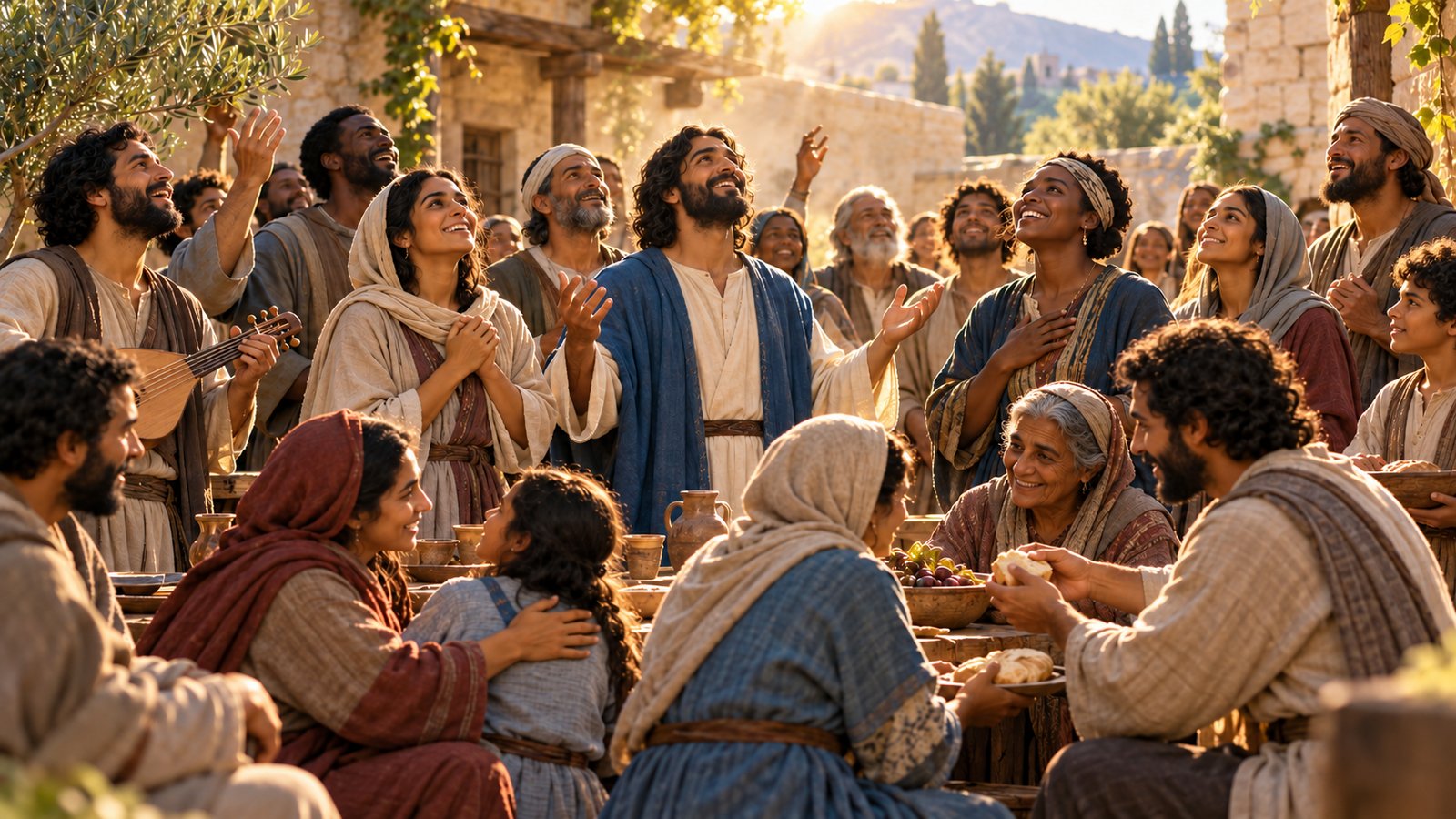
A congregation gathers around Jesus without becoming dependent on a sanctuary of stone. Its members do not share one ancestry, social position, or personal history. They share the risen Lord and the Spirit He gives. The apostles call this people God’s temple.
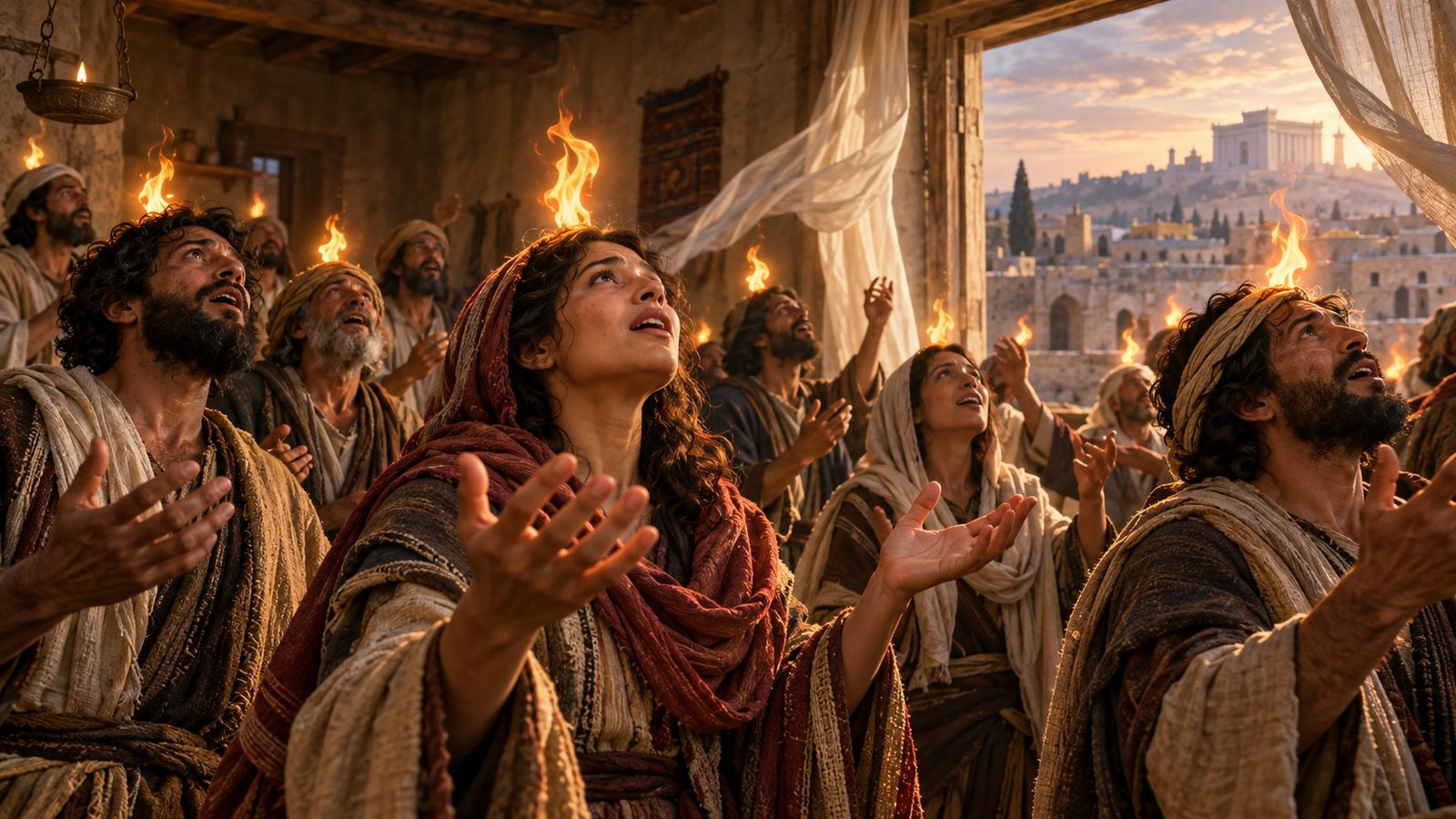
That is more than a metaphor for being religious. Through Jesus, God grants access to Himself and makes His dwelling among those He has redeemed. The Temple story now concerns both the congregation and the believer’s embodied life. Worship includes prayer and praise, but also reconciliation, sexual holiness, generosity, and service.
19So then you are no longer strangers and foreigners, but you are fellow citizens with the saints and of the household of God,
20being built on the foundation of the apostles and prophets, Christ Jesus himself being the chief cornerstone;
21in whom the whole building, fitted together, grows into a holy temple in the Lord;
22in whom you also are built together for a habitation of God in the Spirit.
Together: A holy temple in the Lord
Ephesians 2:11–22 addresses Gentiles once alienated from Israel’s covenant promises. Through Jesus’ blood they are brought near. He reconciles Jews and Gentiles to God through the cross and creates one new humanity in Himself. Both have access in one Spirit to the Father.
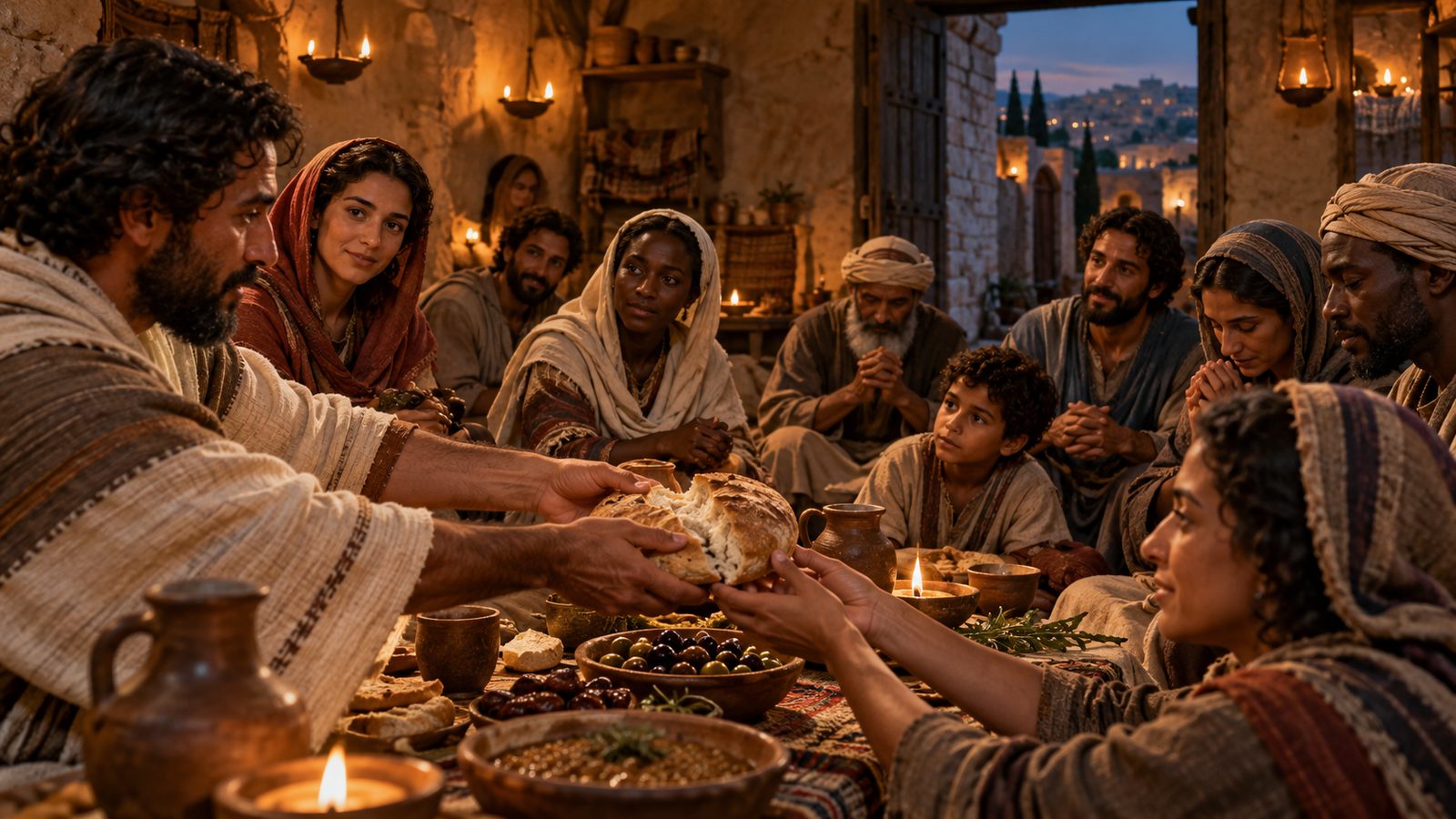
Paul then describes a household built on the apostles and prophets, with Christ Jesus as the cornerstone. The whole building grows into a holy temple, a dwelling of God in the Spirit. The center is not a new ethnic hierarchy or rival sanctuary. It is Jesus’ reconciling work and the shared life of His people.
The spiritual reality has practical consequences. We cannot celebrate being God’s temple while cultivating hatred, contempt, or factions among the living stones. Reconciliation is not optional decoration around worship; it belongs to the dwelling Christ is building.
Personally: Your body belongs to the Lord
In 1 Corinthians 6:12–20, Paul applies temple language to the believer’s body within a warning against sexual immorality. The body is for the Lord, belongs to Christ, and will be raised. The Spirit’s indwelling does not make physical conduct unimportant. It makes our embodied life a matter of worship.
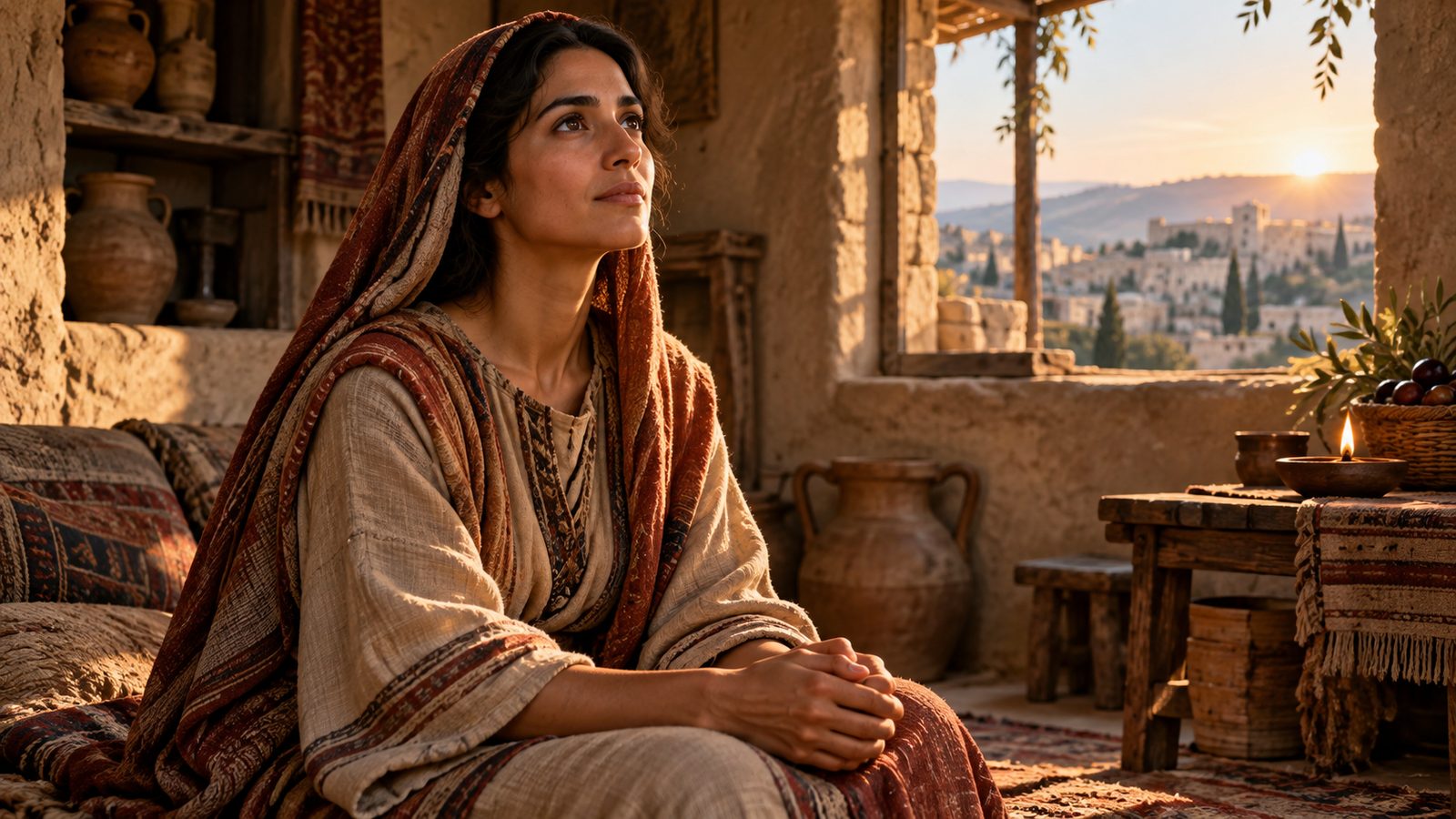
Paul’s reasoning is both gift and claim: we have received the Spirit, and we have been bought with a price. Christian freedom is not ownership of ourselves without accountability. We honor God in the body because we belong to Jesus.
This passage must not be reduced to a slogan about fitness or appearance. Its immediate issue is sexual holiness and union with Christ. Broader applications to bodily care should remain subordinate to that explicit teaching, never implying that illness or disability makes a believer a lesser temple.
Corporately: Do not tear down God’s temple
First Corinthians 3:5–17 addresses ministry, rivalry, and the congregation as God’s building. Paul’s temple language here is directed to the community. Leaders must build on Jesus Christ rather than turn the Church into the possession of a personality or faction.
The distinction between chapters 3 and 6 matters. God cares about both His gathered people and the individual believer’s body. Private devotion cannot excuse damage to the congregation, and public ministry cannot excuse hidden sin.
A priesthood formed around the cornerstone
First Peter 2:4–10 begins with coming to Jesus, the living stone rejected by people and chosen by God. Believers become living stones in a spiritual house and a holy priesthood offering spiritual sacrifices acceptable through Him. Peter joins this calling to scriptural testimony about the cornerstone and to language of a chosen people and royal priesthood.
The foundation is Jesus’ fulfillment, not our promotion to independent spiritual power. He bears sin and brings us to God (1 Peter 2:24; 3:18). The priesthood of believers does not replace His unique mediation. Our worship is acceptable through Him, and our vocation is to proclaim God’s excellencies and live honorably among our neighbors.
What sacrifices do we offer?
Jesus’ sacrifice for sin is complete. Believers therefore do not offer themselves as additional atonement. Romans 12:1–2 calls for lives presented to God in response to His mercy; Hebrews 13:15–16 names praise, doing good, and sharing as sacrifices pleasing to Him.
Priestly service includes thanksgiving, intercession, obedience, care for those in need, and faithful witness. A prayer gathering and a costly act of reconciliation can both express this calling. We minister from the Father’s welcome rather than trying to earn adoption by religious effort (Romans 8:15–17).
Inclusion without boasting
The Church’s shared life includes believing Jews and Gentiles through Israel’s Messiah. Gentiles were brought near to promises from which they had been strangers; they were not authorized to despise the people through whom the Messiah came. Romans 11 warns against boasting and directs attention to God’s continuing faithfulness. We therefore distinguish the Spirit-indwelt Church from the modern state of Israel without making either erase the other. National citizenship does not confer salvation, and Gentile inclusion does not justify antisemitism. The saving center is the same Jesus, and the proper response is gratitude, humility, intercession, and witness.
The pattern becomes a life of response
The old sanctuary established the need for sacrifice, cleansing, illumination, provision, intercession, and access. Jesus accomplishes the saving realities: His blood cleanses, He gives life, and He intercedes for those who come through Him. The Spirit forms a people who respond with holiness and love (Hebrews 9:14; 7:25; Ephesians 2:18–22).
Temple Prayer can help us attend to those realities through thanksgiving, confession, Scripture, fellowship, intercession, and quiet obedience. It remains a teaching framework, not a required sequence, a technique for controlling God, or an alternative to the gospel. The goal is a life more fully open to Jesus.
A holy dwelling under His authority
God’s indwelling is not a withdrawal from government. His Word orders the life of His people. What happens in our relationships, bodies, leadership, and finances belongs before the same Lord we address in prayer. Ask both temple questions: How am I honoring God in my body, and how am I helping build up His people? Receive His mercy where repentance is needed, seek reconciliation where relationships are broken, and serve with the strength the Spirit supplies.
Temple Prayer Response
Father, thank You for welcoming us through Your Son. Jesus, You are the cornerstone and our sufficient sacrifice. Holy Spirit, make our shared life a holy dwelling. Cleanse our bodies and relationships, heal division, and turn our gifts toward service. Teach us to minister from belonging and to honor You in public and in secret. Amen.
Ephesians 2:11–22; 1 Corinthians 3:5–17; 6:12–20; 1 Peter 2:4–12, 24; 3:18; Romans 8:15–17; 11:17–29; 12:1–2; Hebrews 7:25; 9:14; 13:15–16.
- How do the corporate and individual temple passages differ in their immediate settings? What would priestly service look like in your ordinary responsibilities? Where does your congregation need the reconciliation that belongs to God’s dwelling?
The labeled Scripture block quotes the World English Bible (WEB), public domain; other Scripture discussion is summarized. The individual and corporate temple passages are distinguished in context. This chapter does not present spiritual sacrifices as further atonement or equate the Church’s identity with modern Israel’s political history. L: Ephesians 2 — Reconciliation and God’s dwelling | https://ebible.org/eng-web/EPH02.htm L: 1 Corinthians 3 — The congregation as God’s temple | https://ebible.org/eng-web/1CO03.htm L: 1 Corinthians 6 — The body and holiness | https://ebible.org/eng-web/1CO06.htm L: 1 Peter 2 — Living stones and priesthood | https://ebible.org/eng-web/1PE02.htm L: Romans 12 — Living sacrifice | https://ebible.org/eng-web/ROM12.htm L: Hebrews 13 — Praise, generosity, and doing good | https://ebible.org/eng-web/HEB13.htm