Primary passages: John 1–2; Hebrews 7–10.
We have followed God’s appointed places through sacrifice, priestly ministry, royal failure, exile, restoration, and the Temple of Jesus’ day. Those histories establish the need for holiness, mediation, forgiveness, faithful kingship, and God’s dwelling with His people. Here the New Testament identifies the One who fulfills those foundations. The next chapter follows the consequence: people joined to Jesus become God’s dwelling by the Spirit.
The sign is a resurrection
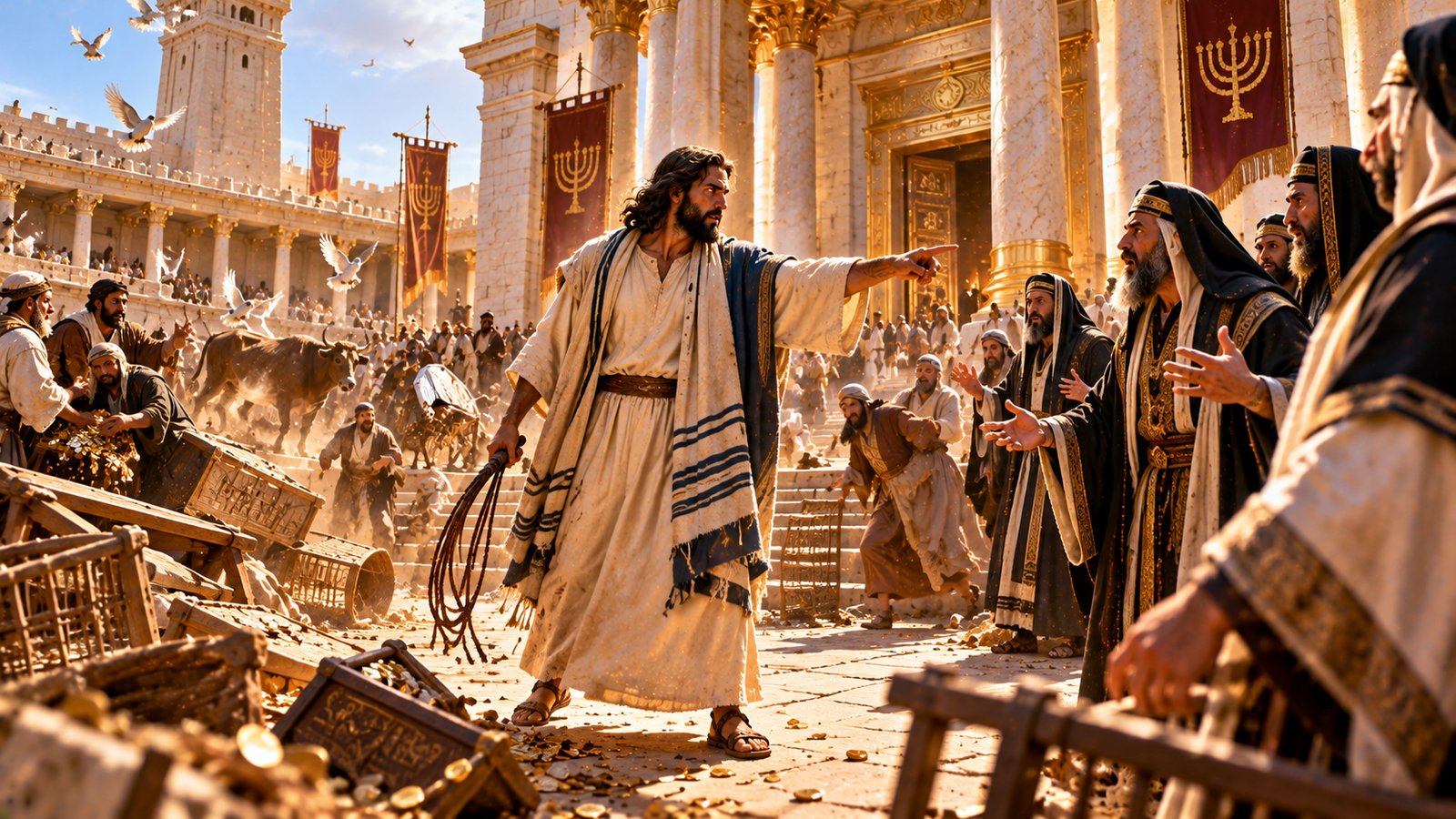
After Jesus confronts the misuse of His Father’s house, His questioners demand a sign. His answer concerns a temple destroyed and raised in three days. They hear a claim about the stone sanctuary; John tells us He is speaking about His body (John 2:18–22).
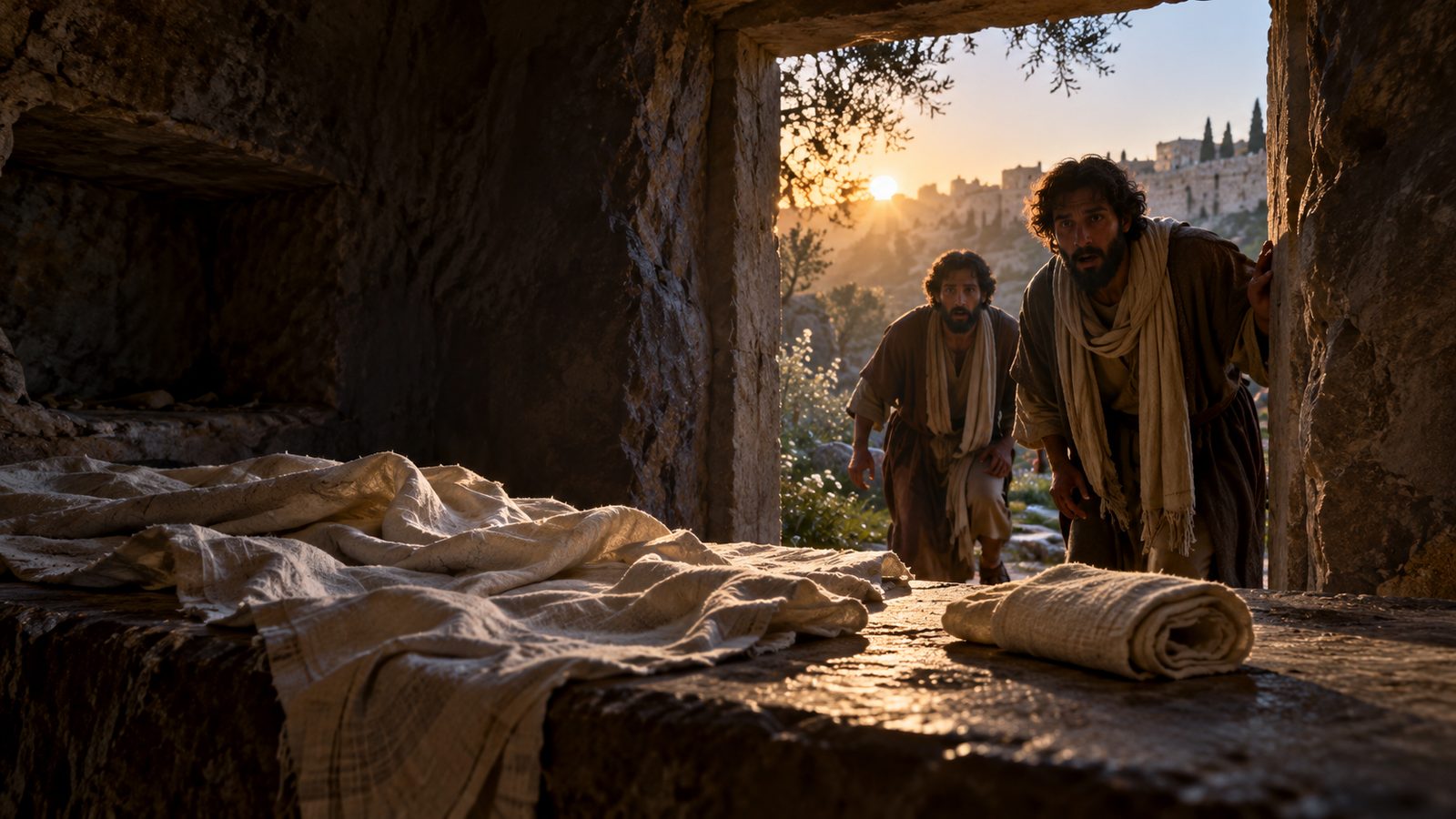
The explanation matters. We do not have to invent a hidden meaning: the Gospel identifies it. After Jesus rises, His disciples remember His words and believe. The resurrection vindicates the Son’s claim and changes how they understand the sanctuary story. The place where people meet God is now revealed decisively in the crucified and risen Jesus.
19Jesus answered them, “Destroy this temple, and in three days I will raise it up.”
20The Jews therefore said, “It took forty-six years to build this temple! Will you raise it up in three days?”
21But he spoke of the temple of his body.
22When therefore he was raised from the dead, his disciples remembered that he said this, and they believed the Scripture and the word which Jesus had said.
The Word became flesh
John begins before the world’s creation: the Word is with God and is God. The Word becomes flesh and dwells among us, revealing glory and making the Father known (John 1:1–18). The language of dwelling resonates with the Tabernacle story, but John’s claim goes beyond a useful comparison. God’s self-revelation comes through the incarnate Son.
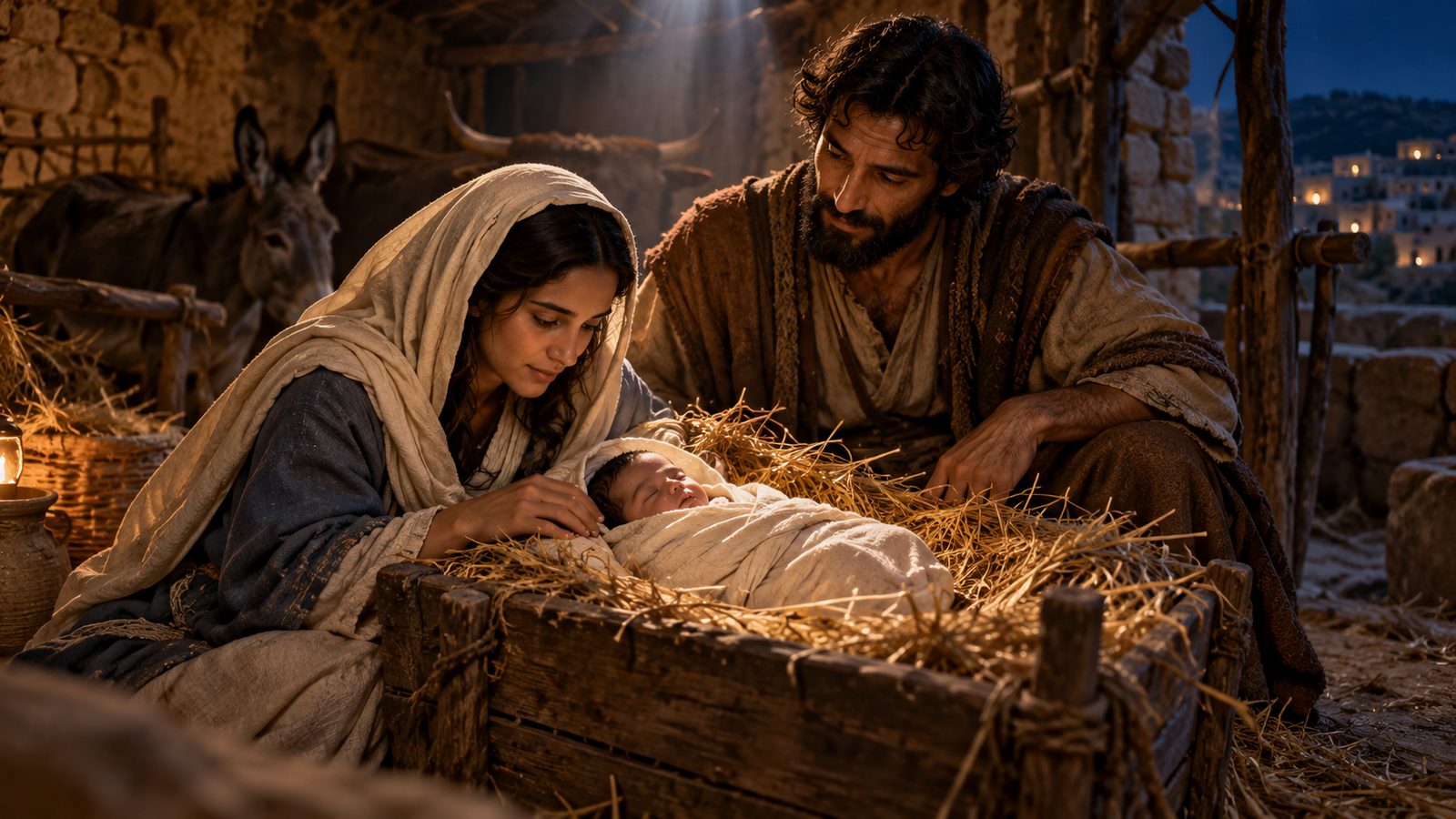
Colossians 2:9 identifies the fullness of deity dwelling bodily in Christ. Jesus is therefore not simply another prophet entering sacred space. The Son makes the Father known, receives the honor due Him, and brings people into fellowship with God. His humanity is real, and His divine identity is not an optional addition to His teaching.
What the earlier sanctuary established
The Tabernacle taught Israel that a holy God provides a way for His people to draw near. Sacrifice addressed defilement; priests mediated; the restricted inner sanctuary exposed the seriousness of approaching God. Repeated offerings also demonstrated that the final cleansing of worshipers had not yet been accomplished (Hebrews 9:1–10; 10:1–4).
Jesus’ ministry fulfills that foundation through action, not resemblance alone. He obeys the Father, offers Himself, rises from death, and ministers in God’s presence for His people. The sanctuary history helps us understand what His work accomplishes; the apostolic witness identifies Him as the promised Messiah and Son of God (John 20:30–31).
The sacrifice that needs no repetition
John the Baptist identifies Jesus as the Lamb of God who takes away the world’s sin (John 1:29). Paul identifies Christ as our sacrificed Passover (1 Corinthians 5:7). Hebrews explains the decisive difference: Jesus offers His own blood and obtains eternal redemption, cleansing the conscience for service to the living God (Hebrews 9:11–14).
His offering is not one more installment in an endless series. The Son’s obedient self-offering sanctifies His people once for all (Hebrews 10:5–14). We do not add religious performance, personal suffering, or another animal offering to make His atonement sufficient. We receive what He has accomplished and respond with grateful obedience.
The Priest whose ministry continues
Jesus is from Judah, not the Levitical priestly line. Hebrews explains His priesthood through Psalm 110’s oath concerning the order of Melchizedek. His indestructible life and continuing intercession establish a priesthood that death cannot interrupt (Hebrews 7:11–28).
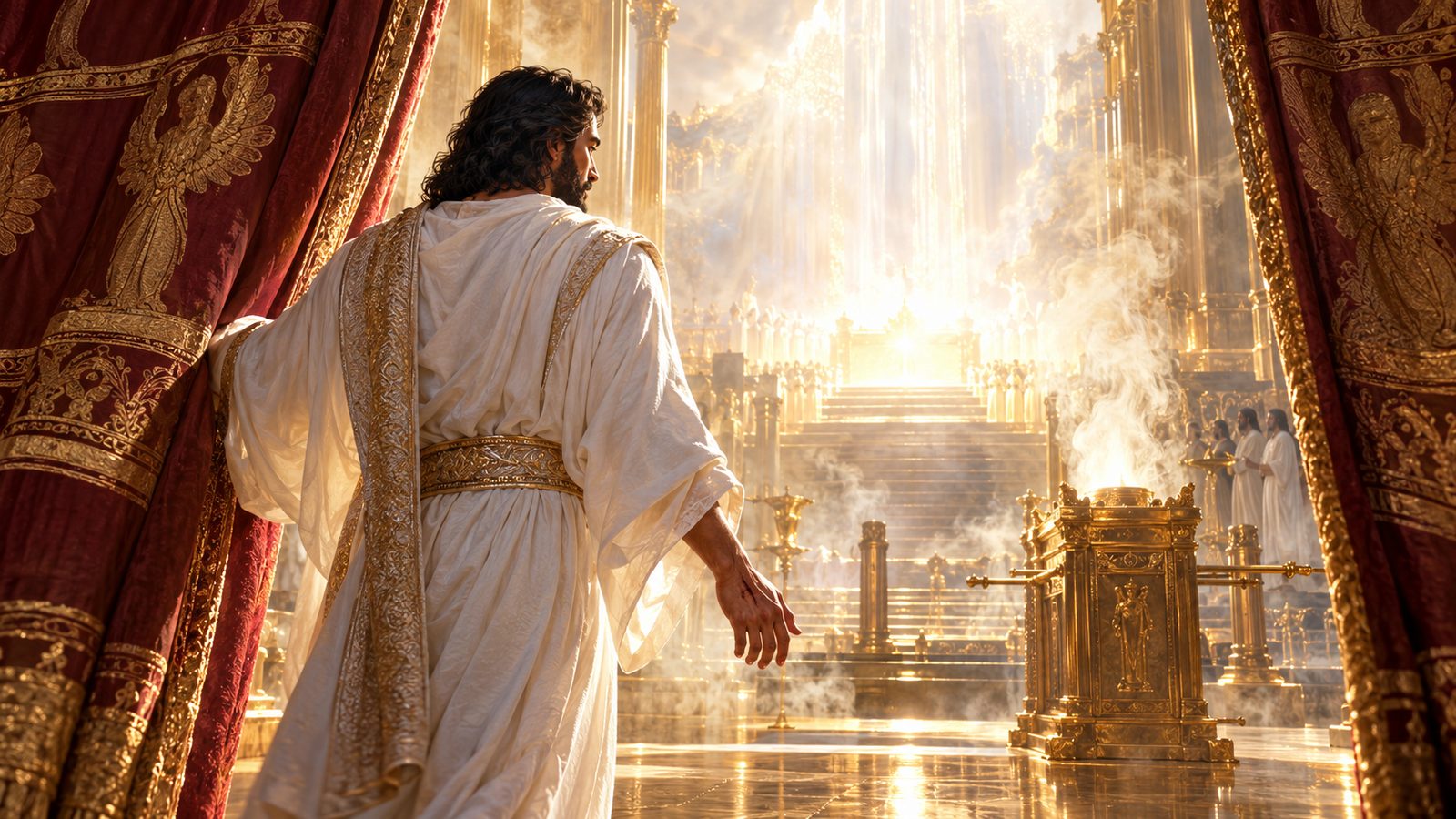
The One who offered Himself lives to bring His people to God. Hebrews explicitly names Him the great High Priest and Son of God (4:14–16). His priesthood combines holiness with mercy: He is without sin and able to sympathize with our weakness. We approach the throne of grace because of His character and work, not our claim to deserve an audience.
The promised King and the rejected stone
The Temple story is also a royal story. God’s covenant with David establishes the expectation of enduring kingship. Gabriel identifies Jesus as the Son who receives David’s throne, and Peter explains His resurrection and exaltation in relation to David’s promises (Luke 1:32–35; Acts 2:29–36).
Jesus applies Psalm 118’s rejected-stone passage to His confrontation with the leaders, and the apostles proclaim Him as the cornerstone (Mark 12:10–11; Acts 4:10–12). Temple, priesthood, sacrifice, and kingship converge in Him. These connections have textual foundations; they are not an attempt to assign a secret code to every architectural detail.
The furnishings and the fulfilled needs of worshipers
Jesus calls Himself the bread of life and light of the world (John 6:35; 8:12). His blood cleanses, He intercedes, and His flesh is connected explicitly with access through the veil (Hebrews 9:14; 7:25; 10:19–22). The sanctuary’s provisions establish the needs that His saving work meets: life, cleansing, illumination, fellowship, and access.
Temple Prayer can trace those needs through the furnishings to help us worship with understanding. We must distinguish a biblical identification from a teaching analogy. John 10:9’s door image occurs in a shepherd discourse; it is not an explicit exposition of the Tabernacle gate. Likewise, Scripture does not identify Jesus with every material, measurement, or decorative detail. Strong fulfillment teaching follows the connections the text actually supplies.
Access through the Son
At His death the Temple curtain is torn; Hebrews summons believers to enter through His blood with a sincere heart and full assurance (Matthew 27:51; Hebrews 10:19–22). Access does not mean casualness. We are welcomed through the holy Son and called to hold fast, love one another, and gather faithfully (Hebrews 10:23–25).
Jesus’ declaration that no one comes to the Father except through Him is the governing claim (John 14:6). We do not approach an abstract spiritual presence by mastering a technique. We come to the Father through His Son, in the Holy Spirit.
The living Temple
Jesus is the true meeting place between God and humanity. His resurrection establishes that this Temple cannot be finally destroyed, and His priesthood establishes that our access does not expire with an earthly priest. The Father’s government reaches our lives through allegiance to the Son. Receive Him as Savior and Lord. Bring sin into His light, trust His sacrifice, listen to His Word, and join His people in worship and service. The Temple pattern becomes fruitful when it helps us understand and respond to Jesus’ accomplished work.
Temple Prayer Response
Father, thank You for making Yourself known through Your Son. Jesus, You are the living Temple, the sufficient sacrifice, the enduring Priest, and the promised King. Forgive us for treating You as merely an inspiring teacher or trusting our performance for access to God. Holy Spirit, deepen our understanding of Scripture and form our lives under His authority. Amen.
John 1:1–18, 29; 2:18–22; 6:35; 8:12; 14:6; 20:30–31; Colossians 2:9; Psalm 110; Hebrews 4:14–16; 7:11–28; 9:11–14, 24–28; 10:1–25; Luke 1:32–35; Acts 2:29–36; 4:10–12.
- How does the resurrection validate Jesus’ Temple claim? Which Old Testament foundations does Hebrews explicitly identify as fulfilled in His ministry? How does His continuing priesthood change the way you approach the Father?
The labeled Scripture block quotes the World English Bible (WEB), public domain; other Scripture discussion is summarized. Explicit biblical identifications are distinguished from devotional comparisons involving the furnishings. The heavenly sanctuary is treated as the reality of Christ’s ministry, not something His resurrection makes obsolete. L: John 2 — Jesus identifies the temple of His body | https://ebible.org/eng-web/JHN02.htm L: John 1 — The eternal Word made flesh | https://ebible.org/eng-web/JHN01.htm L: Hebrews 7 — The enduring priesthood | https://ebible.org/eng-web/HEB07.htm L: Hebrews 9 — Eternal redemption and heavenly ministry | https://ebible.org/eng-web/HEB09.htm L: Hebrews 10 — The sufficient offering and opened way | https://ebible.org/eng-web/HEB10.htm