Primary passages: John 2:13–22; Mark 11; Luke 19:41–48; Matthew 27:50–51.
Chapter 31 followed the sanctuary’s desecration and rededication under the Seleucids. Now we enter the Temple world of the Gospels. The question moves from whether worship can be restored after a foreign ruler’s assault to whether people will recognize the Messiah who stands among them. The next chapter will examine Jesus’ claim that His own body is the Temple.
The Son enters His Father’s house
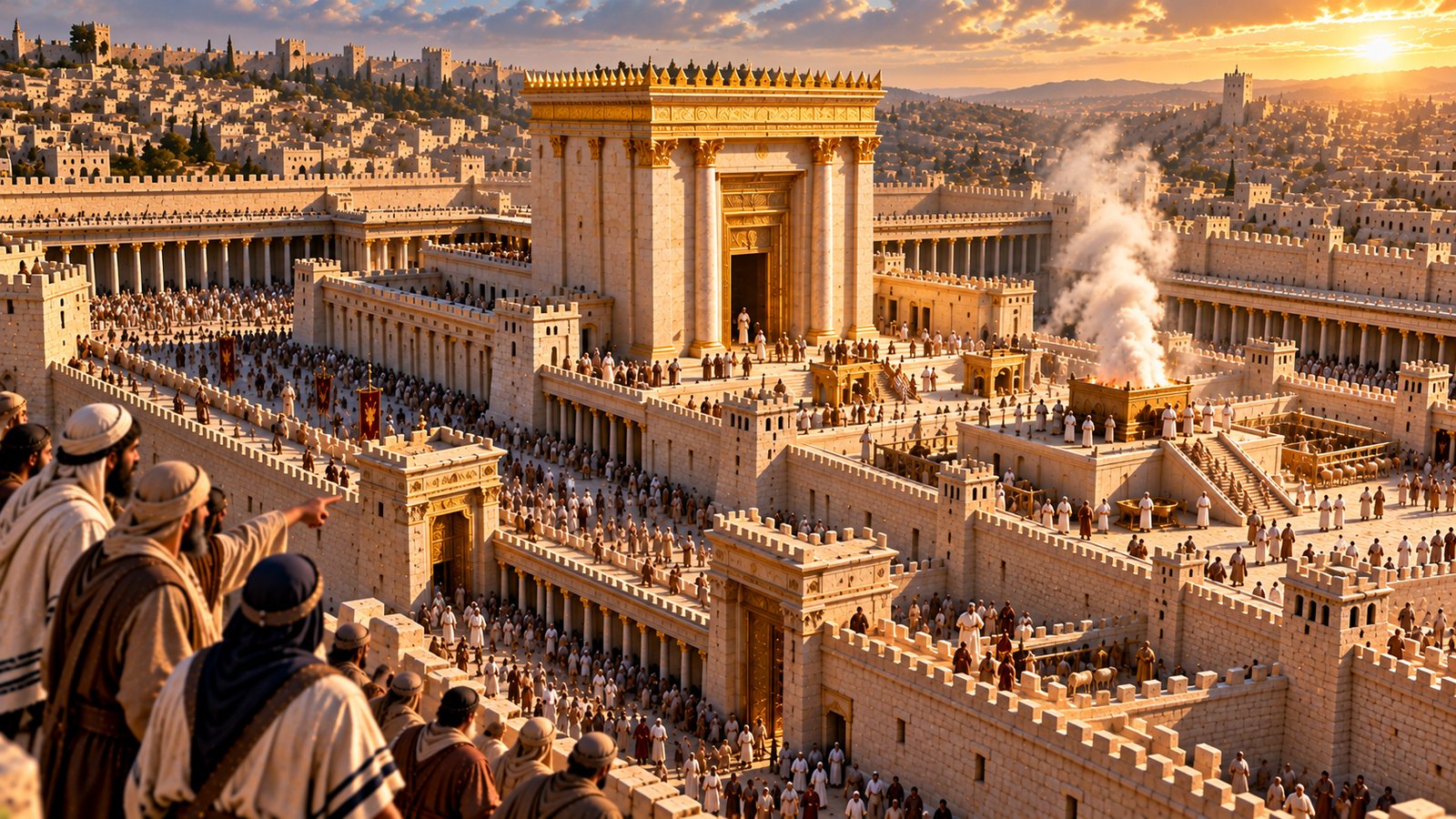
The Temple courts are busy when Jesus arrives for Passover. John names the sellers of oxen, sheep, and doves and the money changers at their tables. Jesus makes a whip of cords, drives out the animals, scatters the coins, and overturns the tables. He tells the dove sellers to remove their merchandise. This is His Father’s house, and its purpose cannot be reduced to commerce (John 2:13–17).
The scene joins a sacred place with a searching question: What happens when the Son comes to the house and challenges the way it is being used? Jesus’ authority is not simply that of an offended visitor. His words place His relationship with the Father at the center of the confrontation.
16To those who sold the doves, he said, “Take these things out of here! Don’t make my Father’s house a marketplace!”
17His disciples remembered that it was written, “Zeal for your house will eat me up.”
The Temple of Jesus’ day
Herod the Great’s rebuilding and expansion of the Second Temple began around 20–19 BC, with work on the larger complex continuing long afterward. “Herod’s Temple” names this expanded sanctuary, not a completely separate third temple after Solomon’s and Zerubbabel’s. The complex expressed the central place of sacrifice, pilgrimage, and prayer within Jewish life. Its magnificence also belonged to Herod’s world of royal ambition and Roman power.
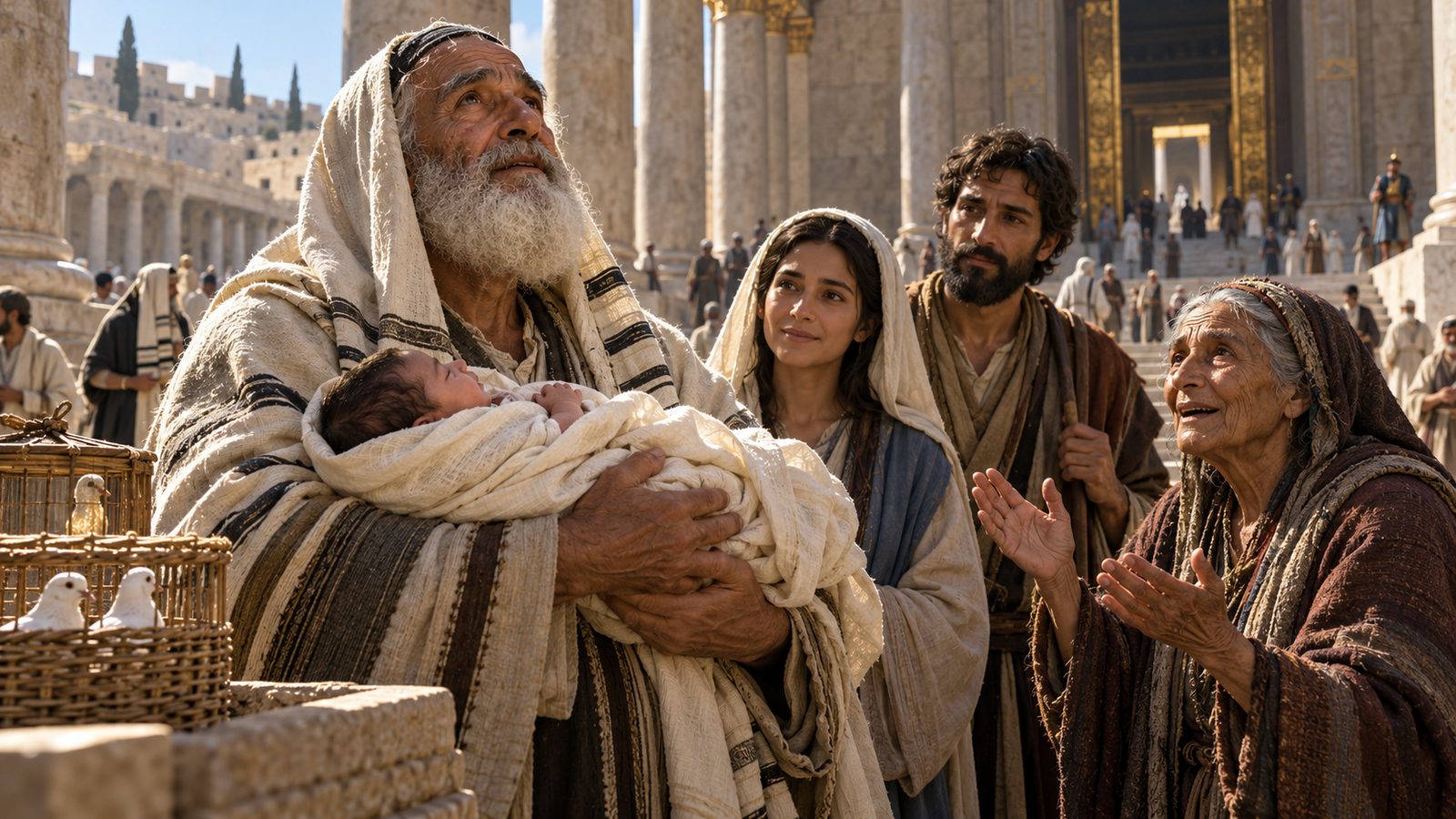
The Gospels show more than one response to this place. Zechariah serves in its priestly order; Simeon and Anna recognize God’s salvation when the child Jesus is brought there; Jesus later teaches in its courts. We should not portray every worshiper or priest as corrupt. Within Israel, faithful expectation and serious unbelief exist side by side (Luke 1:8–23; 2:22–38).
A house of prayer, not an instrument of exploitation
John’s account recalls Psalm 69:9 through the disciples’ memory of zeal for God’s house. Mark’s account of a Temple confrontation joins Isaiah 56:7’s house of prayer for all nations with Jeremiah 7:11’s warning about a den of robbers (Mark 11:15–17). The Gospel accounts differ in placement and detail; we should identify the passage we are discussing rather than silently combine every feature into one reconstructed moment.
The prophetic background is substantial. Isaiah envisions outsiders welcomed to the Lord, while Jeremiah confronts people who rely on the Temple’s presence while practicing injustice. Jesus exercises authority in continuity with those Scriptures. He calls worship back under the Father’s government: holy purpose, prayer, justice, and truth.
The text does not require us to invent the private motives of every merchant or assert that all exchange of money was inherently dishonest. The public use of the house is what Jesus confronts. Religious convenience can become a way of making God’s appointed meeting place serve human advantage.
The sign of His authority
When challenged for a sign, Jesus speaks of a temple destroyed and raised in three days. John explains that He means His body and that His resurrection later leads the disciples to believe Scripture and His words (John 2:18–22). The building’s place in the story is preparing us for a revelation centered on the Son Himself.
This fulfills a foundation already established by the sanctuary: God provides the way sinful people approach Him. Jesus’ obedient life, death, and resurrection accomplish the reconciliation that the earlier sacrificial ministry could not complete. Hebrews identifies Him as the Son and great High Priest, whose own blood secures eternal redemption (Hebrews 4:14; 9:11–14). He is the promised Messiah who brings people to the Father, not merely a teacher using Temple imagery.
Zeal and tears belong together
Luke 19:41–44 records Jesus weeping over Jerusalem and warning of devastating judgment. His confrontation must be read alongside His grief. The city is not an object of casual contempt; His tears reveal the seriousness of its danger and His sorrow over its failure to recognize its visitation.
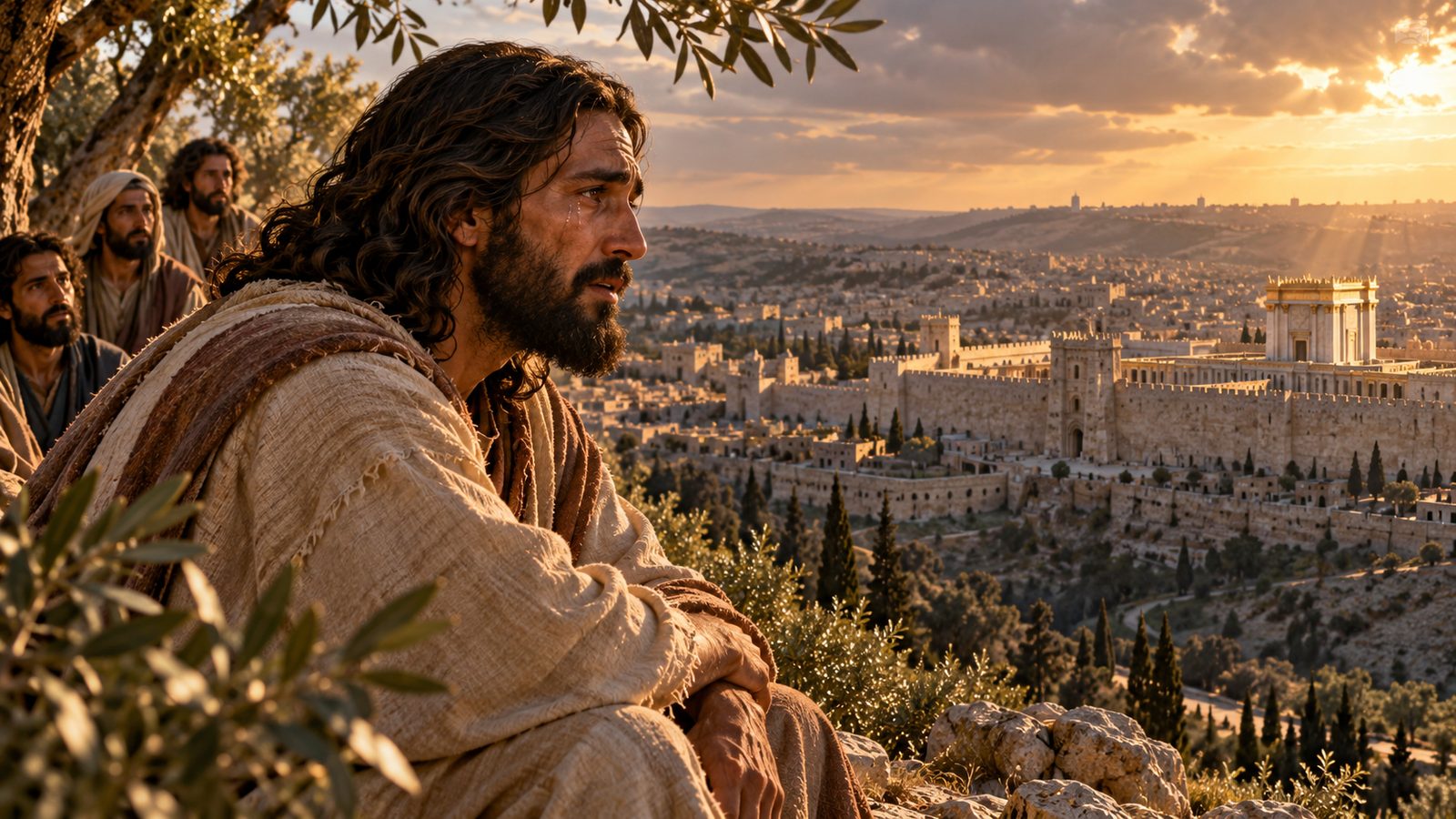
This is a dispute within Israel’s story: Jesus, His disciples, and many who receive Him are Jewish. It cannot justify hatred of Jews or collective guilt assigned to later generations. Christians honor Jesus by receiving His testimony and refusing both religious corruption and antisemitism.
The curtain and the opened way
At Jesus’ death, Matthew records the Temple curtain torn from top to bottom (Matthew 27:50–51). Hebrews explains access to God through Jesus’ blood and His flesh (Hebrews 10:19–22). The saving reality rests on His finished sacrifice, not on our ability to reconstruct what every priest saw or felt at that moment.
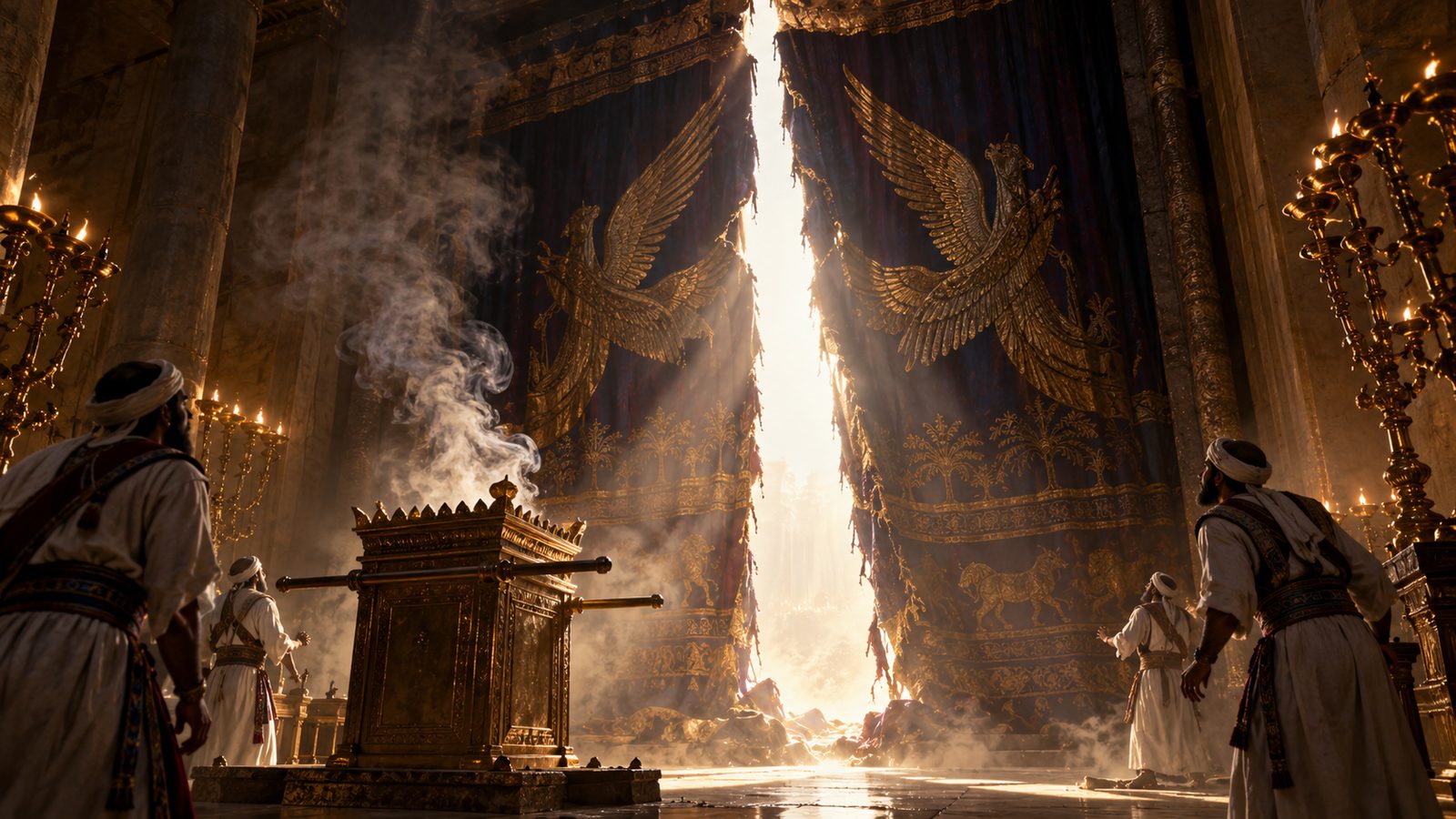
The Temple’s restricted access taught the seriousness of sin and the need for mediation. The crucified and risen Son accomplishes the cleansing and access that foundation prepares us to understand. We therefore approach with confidence and reverence together.
The house belongs to the Father
God’s appointed place of worship was never permission for leaders or worshipers to manipulate Him. Its life was to be governed by His Word. Jesus restores that issue to the center: Whose house is this, and whose authority determines its purpose? Today, a beautiful church, flourishing ministry, or familiar prayer practice cannot substitute for allegiance to Jesus. We come through Him, listen to His Word, and receive the Spirit’s correction. Temple Prayer serves that relationship when it deepens thanksgiving, repentance, intercession, and obedience rather than becoming a religious performance.
Temple Prayer Response
Father, teach us to honor what belongs to You. Jesus, cleanse the motives and practices that turn worship toward our advantage. Give us Your zeal without cruelty and Your compassion without compromise. Holy Spirit, help us recognize and obey the Son whom the Father has sent. We draw near through His sufficient sacrifice. Amen.
John 2:13–22; Psalm 69:9; Isaiah 56:6–8; Jeremiah 7:1–15; Mark 11:15–18; Luke 2:22–38; 19:41–48; Matthew 27:50–51; Hebrews 4:14–16; 9:11–14; 10:19–22.
- How do Isaiah and Jeremiah establish the foundation for Jesus’ confrontation? What does John identify as the sign of Jesus’ authority? Where might convenience, reputation, or profit be displacing the purpose of worship?
The Gospel accounts are read in their own settings. Sensory details and private motives are not asserted beyond the text. Historical terminology distinguishes Herod’s expansion from the numbering of Israel’s temples. The labeled Scripture block quotes the World English Bible (WEB), public domain; other Scripture discussion is summarized. L: John 2 — The Father’s house and the resurrection sign | https://ebible.org/eng-web/JHN02.htm L: Mark 11 — The prophetic confrontation | https://ebible.org/eng-web/MRK11.htm L: Luke 19 — Jesus’ tears and warning | https://ebible.org/eng-web/LUK19.htm L: Israel Museum — Herod’s building legacy | https://www.imj.org.il/en/exhibitions/herod-great L: Israel Museum — Temple trumpeting-place inscription | https://www.imj.org.il/en/node/6580950