Primary passages: Romans 11:28–29; Daniel 9; Ezekiel 37.
The mountain remains in the story
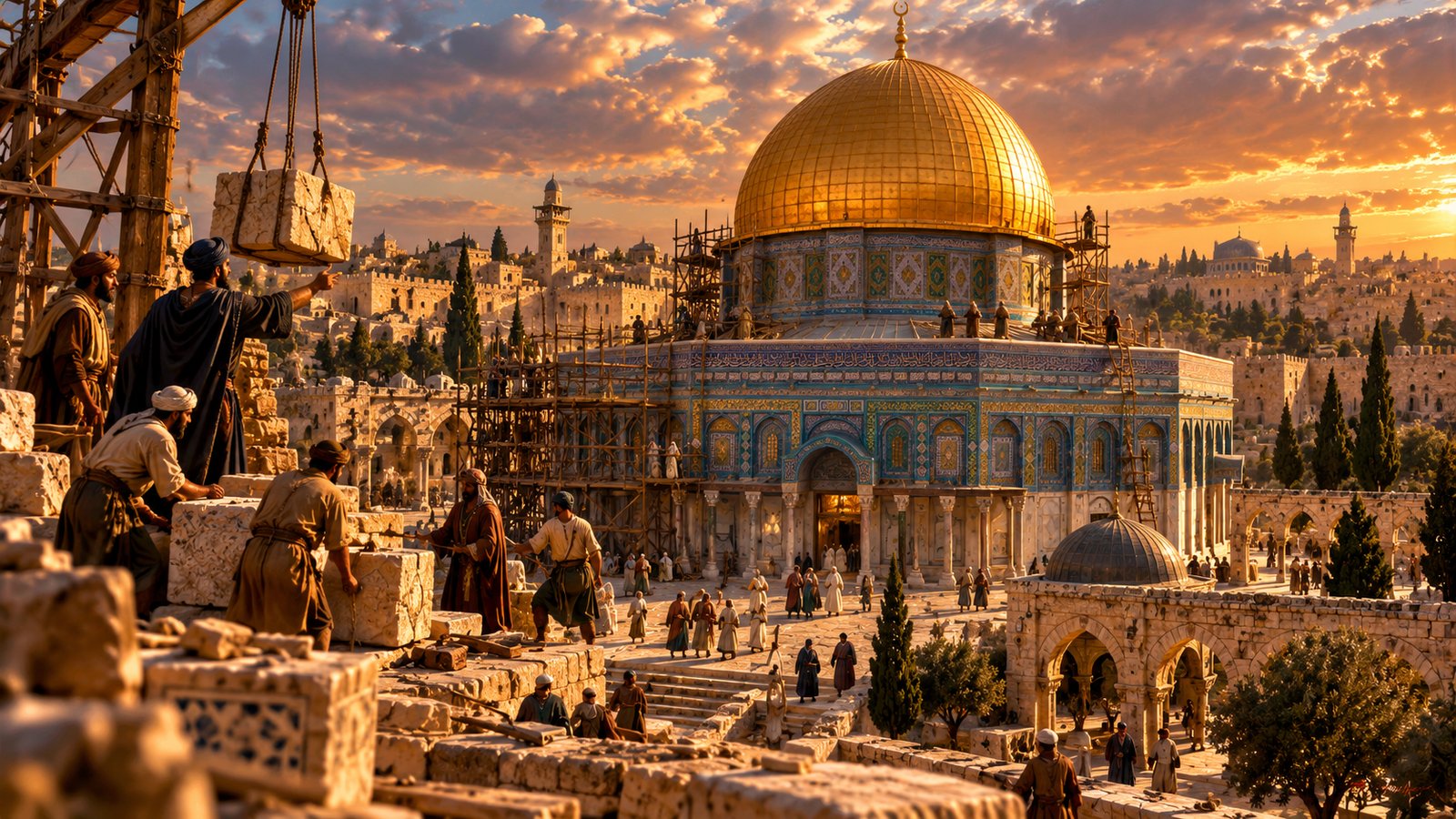
The Temple has been gone for centuries, but the mountain has not disappeared from history. Empires have ruled it. Pilgrims have approached it. Armies have fought for Jerusalem. Beneath the modern city, excavators continue to uncover the streets, water systems, and walls of earlier generations. Above them stands one of the world’s most recognizable shrines: the Dome of the Rock.
Islam emerged in seventh-century Arabia and spread through conquest, government, trade, and religious teaching to become a world religion. Its expansion brought Jerusalem under Muslim rule and established a lasting Islamic claim upon the mount associated in Jewish and Christian tradition with Mount Moriah. Completed in AD 691–692 under the caliph Abd al-Malik, the Dome of the Rock gave that claim a monumental presence on the site of Israel’s ancient temples. [1]
The disagreement is theological as well as territorial. Islam honors figures from Israel’s Scriptures and regards Jesus as a prophet, yet rejects the Christian confession that He is the divine Son of God. The Dome’s inscriptions make that rejection explicit. Islam’s claim to subsequent revelation also conflicts with Jewish rejection of Muhammad’s prophetic authority. These differences cannot be resolved simply by calling the religions interchangeable. For Christians, the identity of the Son remains decisive: access to the Father is through Jesus (John 14:6; 1 John 2:22–23). [2]
The history includes persecution, exclusion, and violent movements that have targeted Jews and Christians, alongside periods of coexistence. We must name specific acts and ideologies honestly rather than claim that exterminating both peoples is a defining tenet held by all Muslims. Christians can reject Islamic teaching about Jesus, confront antisemitism and persecution, and still obey Christ’s command to love their neighbors.
The conflict becomes concrete in the right to pray. Under the longstanding post-1967 status quo, Muslim worship has been permitted on the mount while non-Muslim visits have been allowed subject to restrictions and non-Muslim prayer prohibited. Some Jewish religious authorities also prohibit Jewish entry for reasons of sanctity and ritual purity. Reporting in 2025–2026 documents increasing Jewish prayer and changes in enforcement, even as Israeli officials continue to affirm the status quo. This remains a contested, changing practice rather than a simple declaration of unrestricted prayer rights. [16, 17]
This tension leads into the mystery of a possible third temple. Could a future agreement allow a rebuilt Jewish sanctuary and the Dome of the Rock to coexist on the mount, presented to the world as a breakthrough for peace? That is a speculative scenario, not a biblical prediction of the site’s layout. Scripture’s warnings about deceptive power and corrupted worship require discernment; they do not identify an agreement sharing the mount or equate an Islamic end-time figure with the Antichrist.
This chapter follows the long history with particular attention to the Jewish return, the Holocaust, Israel’s national rebirth in 1948, the wars since then, and archaeology’s testimony to Jerusalem’s biblical past. The question is larger than who controls a hill: What has God promised, how do His people respond to Him, and how does the Temple story remain centered on Jesus?
28Concerning the Good News, they are enemies for your sake. But concerning the election, they are beloved for the fathers’ sake.
29For the gifts and the calling of God are irrevocable.
Two histories that must remain distinct
The Church’s identity as God’s temple does not begin with the establishment of modern Israel. Through Jesus’ death and resurrection, believing Jews and Gentiles are joined into one people indwelt by the Holy Spirit. Paul speaks both of the congregation as God’s temple and of the believer’s body as a temple of the Holy Spirit (1 Corinthians 3:16–17; 6:19–20; Ephesians 2:19–22). That is a present spiritual reality, independent of whether a sanctuary stands in Jerusalem.
Israel’s national history concerns a different, though related, subject: the Jewish people, their enduring connection to the land, dispersion and return, national sovereignty, and the struggle over Jerusalem. National restoration and spiritual reconciliation to God through Jesus are not interchangeable. A government’s decisions are not automatically divine commands, and military victories do not establish a nation’s righteousness. Neither does the Church’s inclusion in God’s promises give Gentile Christians permission to despise Israel. Romans 11 warns against precisely that arrogance.
Daniel’s prayer: Let Scripture teach us how to watch Jerusalem
Before Daniel receives the seventy-weeks prophecy, he reads Jeremiah, confesses sin, and intercedes for Jerusalem and the desolate sanctuary (Daniel 9:1–19). He appeals to God’s mercy, not to the righteousness of his nation. This is the spiritual posture in which we should approach Jerusalem’s later history: Scripture first, humility before God, and prayer for His name to be honored.
Daniel 9:24–27 sets the city within a larger purpose addressing sin and everlasting righteousness. Christians differ over the chronology and fulfillment of its details, which the next chapter examines. Modern events should be measured against the text rather than inserted automatically into a prophetic schedule. Jerusalem’s importance calls us to attentive intercession, not certainty about every headline.
Isaiah 2–4 likewise joins hope for Zion to judgment on pride, injustice, and corruption. National survival is not the same as spiritual restoration. The prophets give us language both for God’s faithfulness and for His demand that His people turn to Him.
A timeline of the mountain and the nations
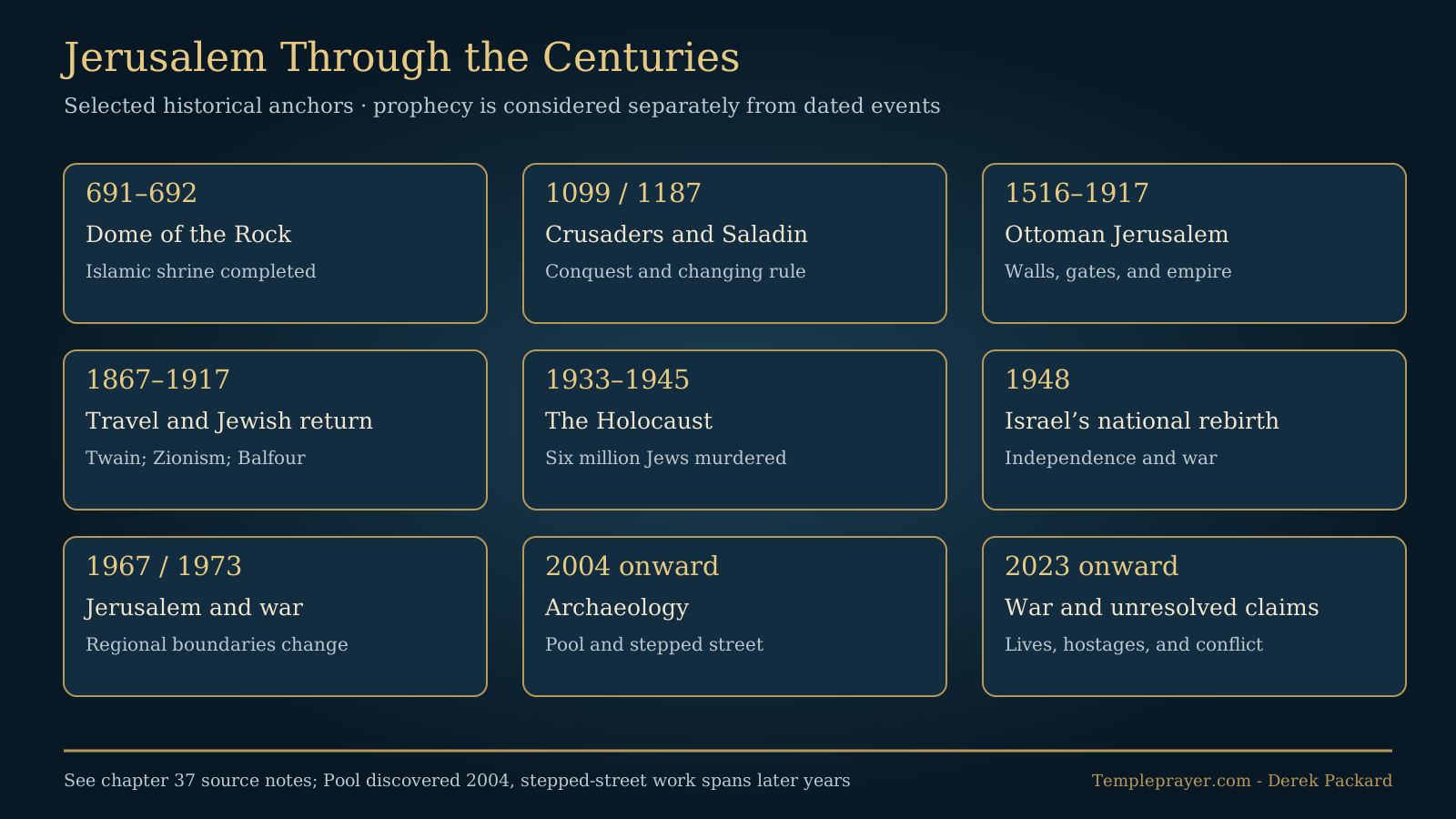
AD 691–692 — A shrine rises on the Temple Mount
The Umayyad caliph Abd al-Malik commissions the Dome of the Rock. It is an Islamic shrine, distinct from the nearby al-Aqsa Mosque, rather than a restoration of the biblical Temple. Its inscriptions express Islamic convictions about God and Jesus that reject the Christian confession of His divine sonship. For a Christian reader, this is a substantive theological disagreement, not merely a difference in architecture. The New Testament directs us to confess the Son faithfully and to love our neighbors; it does not authorize hatred of Muslims. [1, 2]
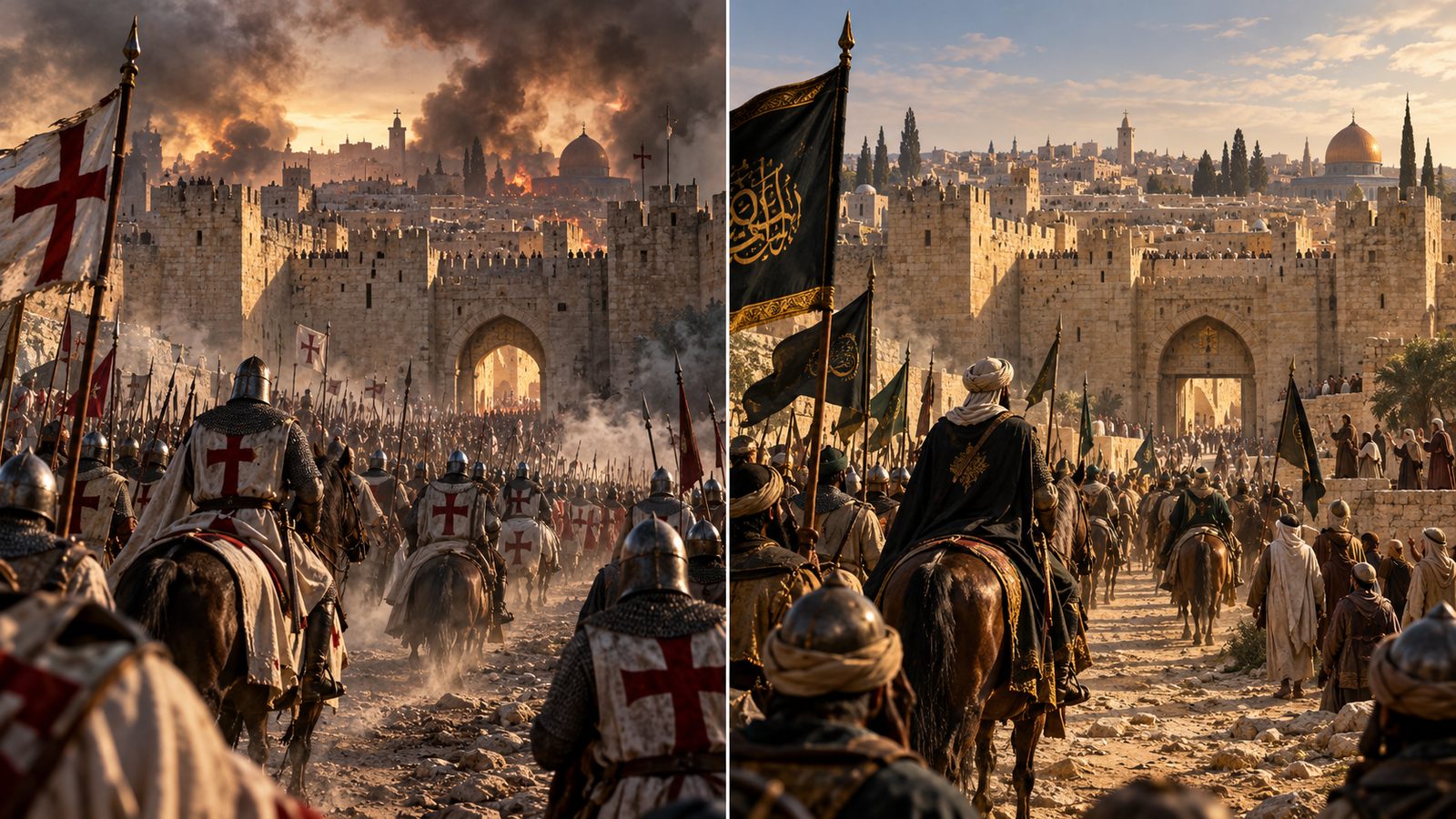
1099 and 1187 — Crusader conquest and Saladin’s return
Crusaders capture Jerusalem in 1099; Saladin recaptures it in 1187. Control of sacred places becomes part of warfare conducted under religious banners. Christians must reckon honestly with atrocities committed by Crusaders, including violence against Jews and Muslims. Carrying the name of Christ does not make an army’s conduct Christlike. [3]
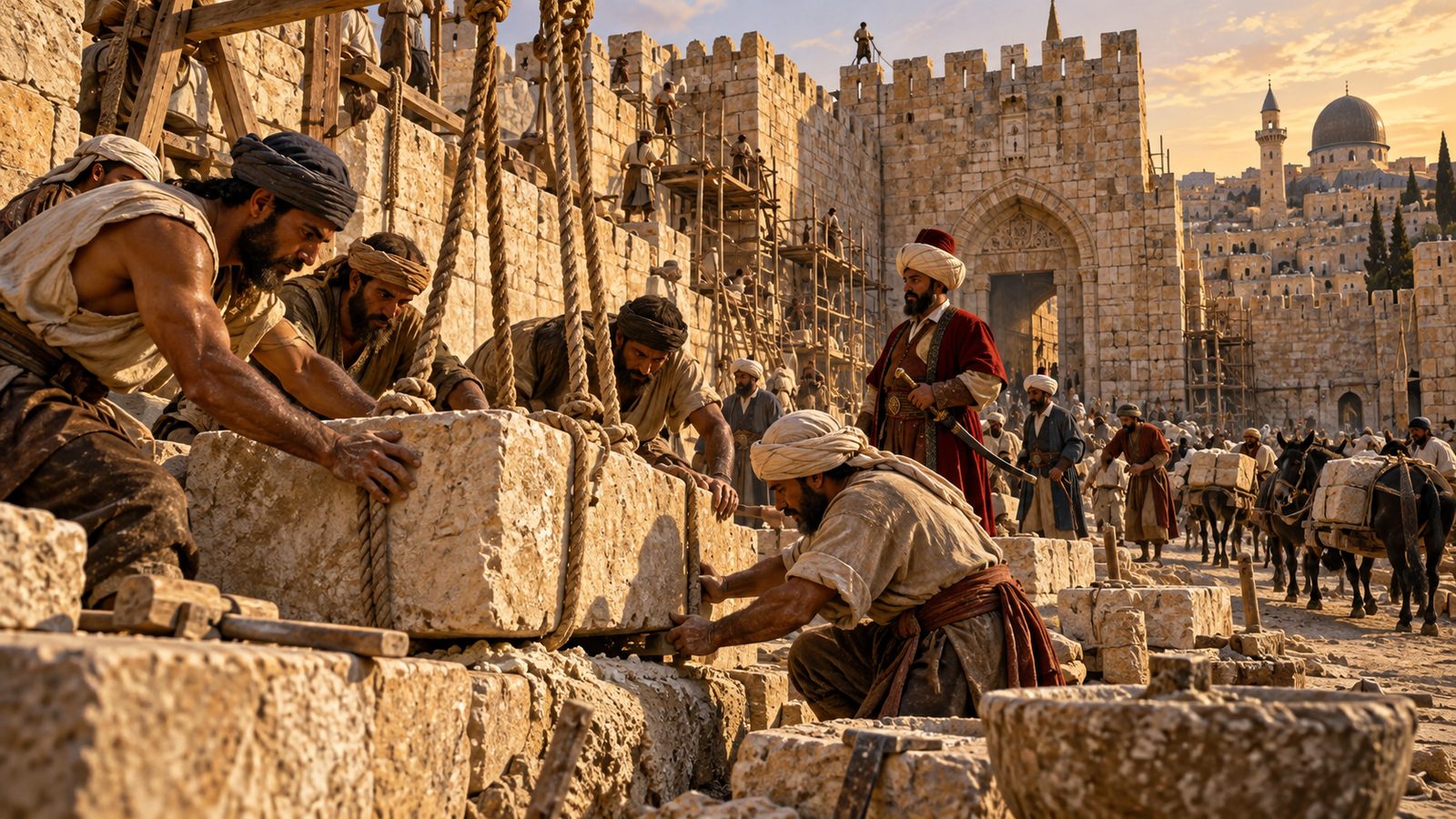
1516–1517 to 1917 — The Ottoman centuries
Jerusalem passes into Ottoman rule during the conquest of the region in 1516–1517 and remains under Ottoman government until 1917. Jewish communities and attachment to Jerusalem persist alongside Muslim and Christian communities. The land’s history is neither an uninterrupted Jewish state nor a complete absence of Jewish life. [3]
1867 — Mark Twain visits the Holy Land
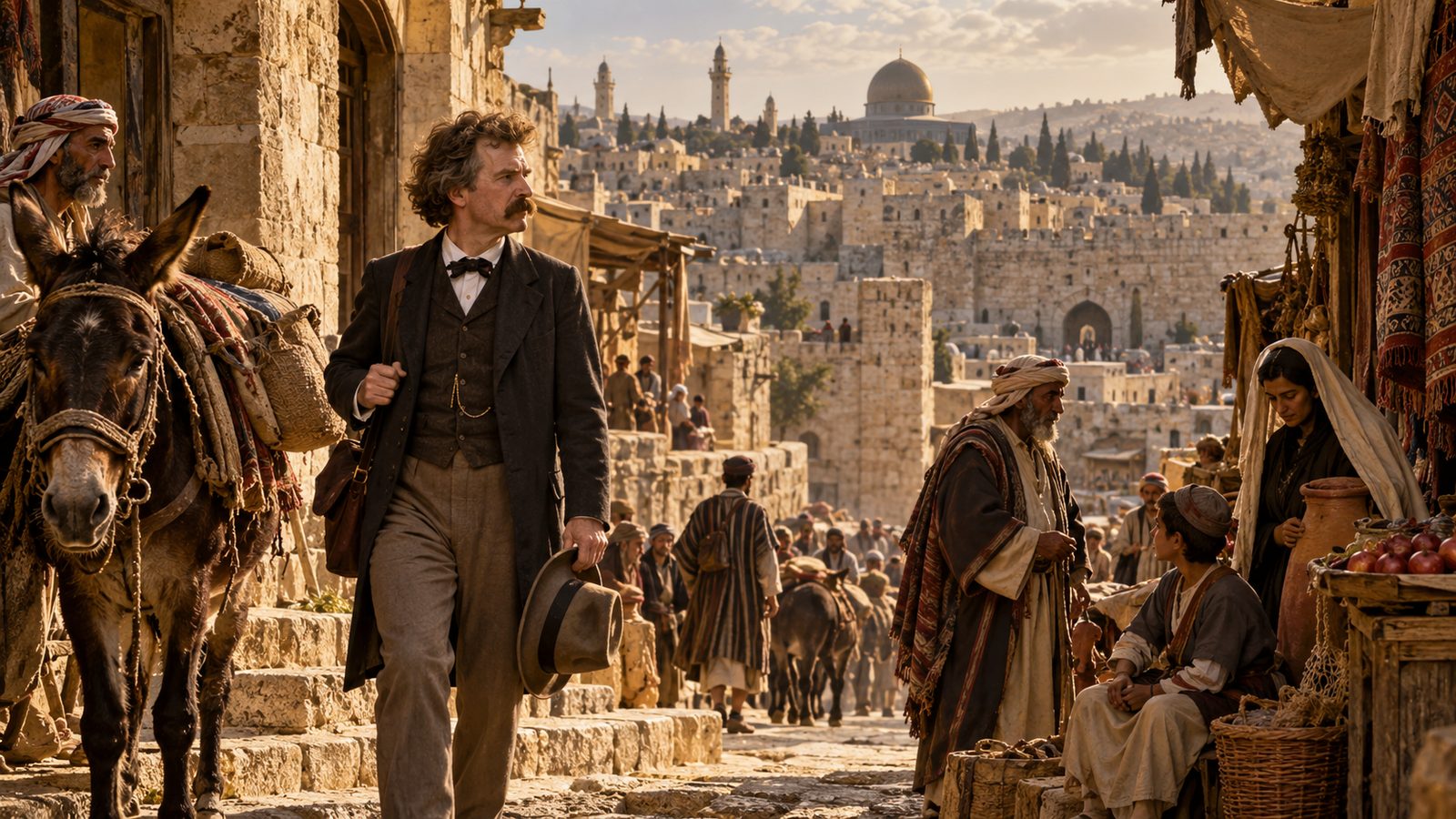
Twain travels through the region in 1867 and publishes The Innocents Abroad in 1869. His descriptions of desolation include the phrase “a silent mournful expanse.” They capture one visitor’s impressions of particular places and conditions. They are not a population census and do not establish that the entire country was empty. Read in context, his account helps readers picture conditions before the great transformations of the following century. [4]
1871 and the late nineteenth century — Nationalism and racial hatred
Germany becomes a unified nation in 1871. In the same broader era, racial theories and exclusionary nationalism give anti-Jewish hatred new political forms. But antisemitism did not originate with German unification: hostility toward Jews reaches back into antiquity and had already produced centuries of persecution, including persecution in societies calling themselves Christian. Theological opposition to antisemitism must therefore include repentance for the Church’s own failures. [5]
1879, 1901, and 1930 — Pergamon’s altar in Berlin
Relief panels from the ancient Pergamon Altar reach Berlin from 1879 onward. A reconstruction is displayed in a predecessor museum in 1901, and the reconstructed west front becomes the centerpiece of the museum completed in 1930. This belongs in the cultural history surrounding Germany’s rise and its interest in imperial antiquity. Revelation 2:13 identifies Pergamum as a place of satanic opposition, but does not identify the surviving altar by name. Its reconstruction does not establish that an artifact caused Nazism or the Holocaust. [6]
Late nineteenth century to 1917 — Jewish return and an approaching political turning point
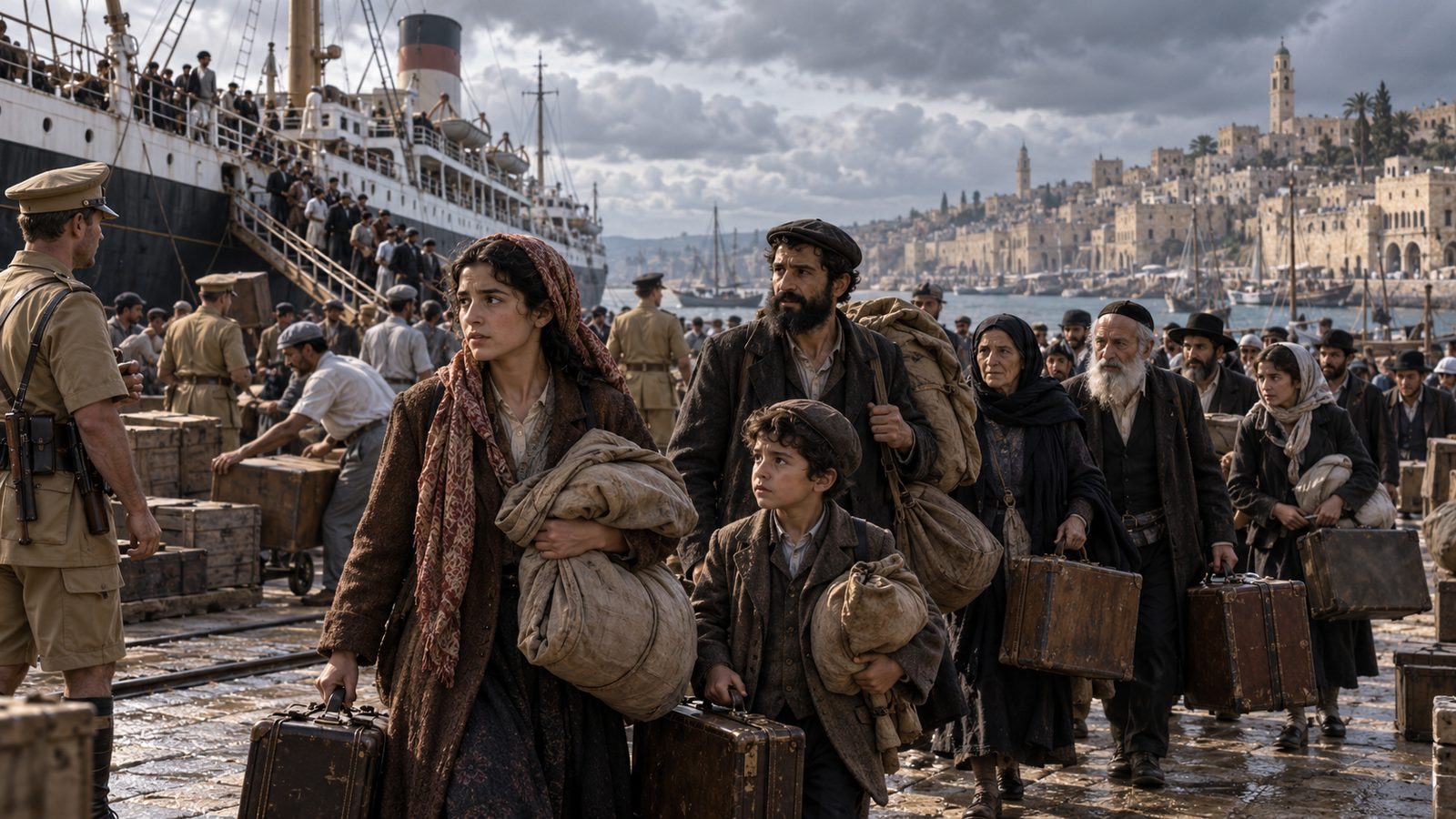
Jewish immigration and organized Zionism grow as Jews seek refuge, national self-determination, and renewed life in their ancestral land. In 1917 Britain issues the Balfour Declaration supporting a Jewish national home while also addressing the rights of existing non-Jewish communities. British forces take Jerusalem that year, ending Ottoman government there. Return and restoration now move onto the agenda of international diplomacy. [3, 7]
1933–1945 — Nazi rule and the Holocaust
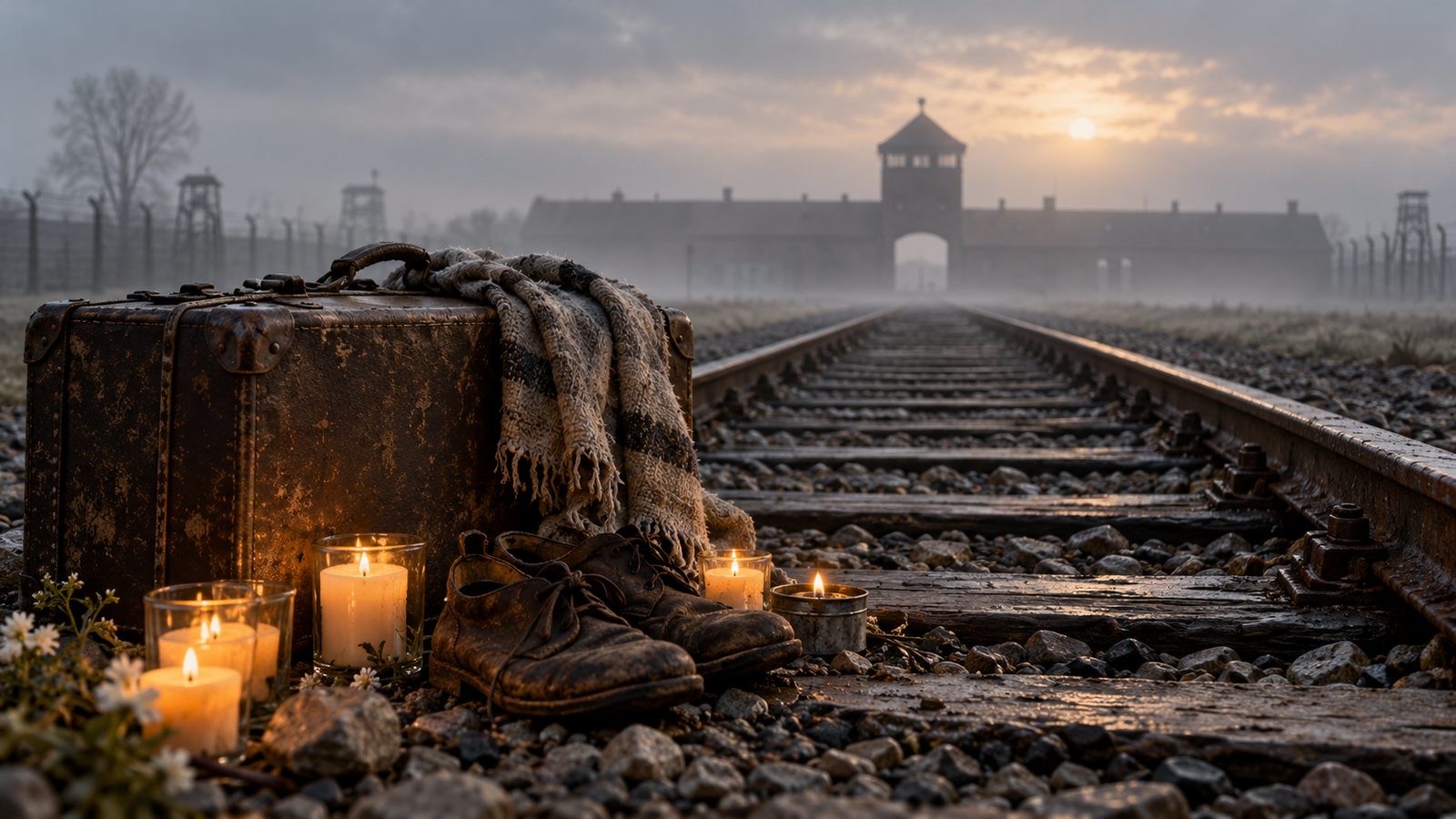
Nazi Germany and its allies and collaborators systematically persecute and murder six million Jews. Their victims are people made in God’s image, not illustrations to be used casually in a prophecy chart. The Holocaust must be remembered as genocide, with the perpetrators’ responsibility stated plainly. It intensifies the urgency of Jewish refuge, but Jewish attachment to the land and the movement for national restoration both predate it. [8]
1947–1949 — Partition, Israel’s rebirth, and war
The United Nations adopts a partition proposal in 1947. Israel declares independence on May 14, 1948; war involving neighboring Arab states follows the already ongoing communal conflict. Israel survives as a sovereign state. The war also uproots large numbers of Palestinian Arabs, creating a refugee crisis that continues to shape the conflict. Recognizing Jewish national restoration does not require ignoring Palestinian suffering. [7, 9]
For Christians who understand Israel’s return in relation to biblical restoration promises, 1948 is a moment of profound significance. That theological reading should be explained from Scripture rather than used to declare every subsequent policy an expression of God’s will. Nor should national rebirth be confused with the nationwide reception of Jesus as Messiah.
Ezekiel’s dry bones: National restoration and the promise of the Spirit
Ezekiel 37:1–14 gives Israel’s restoration a prophetic backdrop. God identifies the dry bones as the whole house of Israel, a people who consider their hope lost. The vision first addresses Israel’s despair in exile: God promises to restore His people to their land and give them life through His Spirit. The bones coming together before receiving breath provide a vivid distinction between restored form and living renewal.
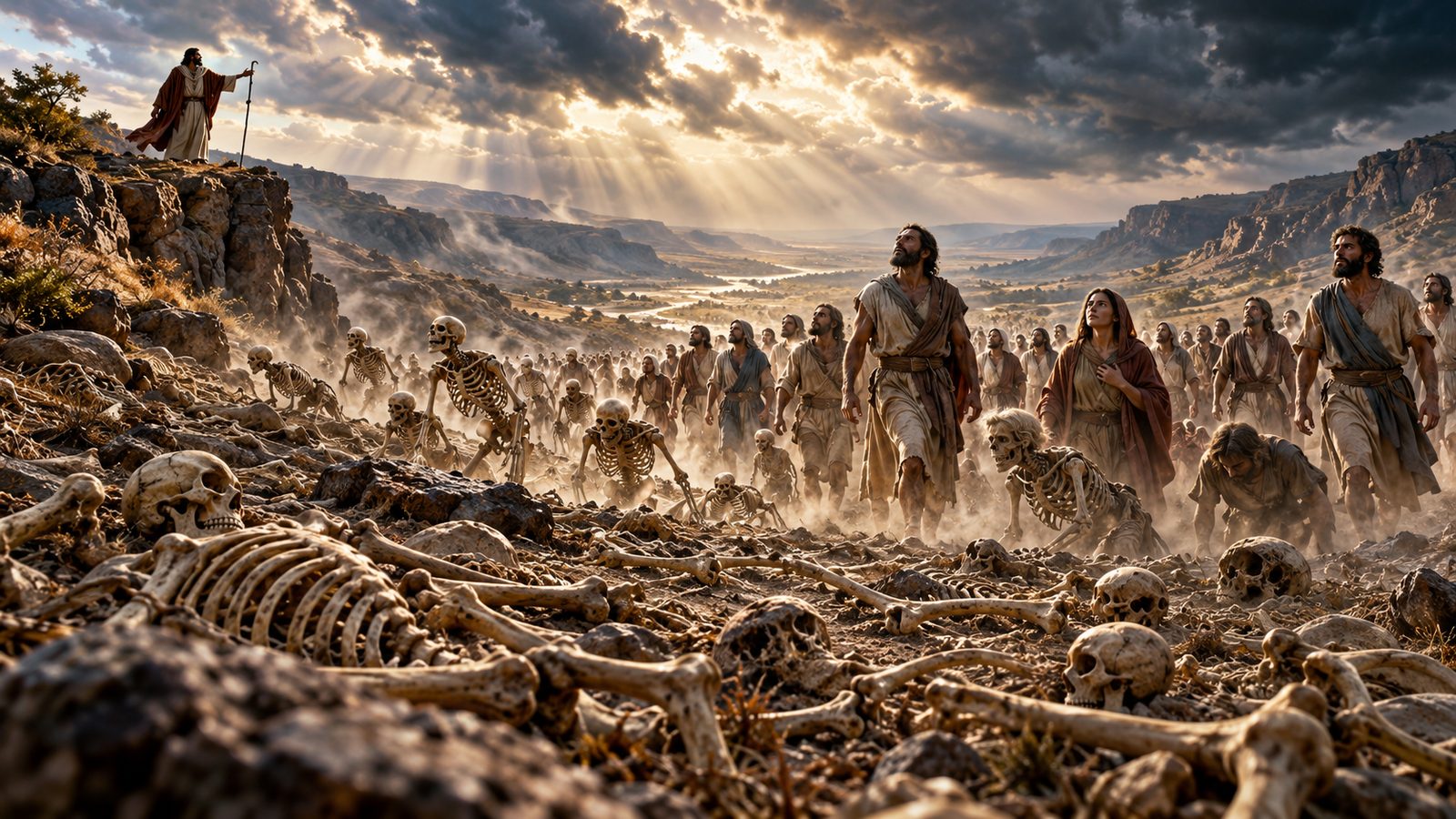
Many Christians understand Israel’s national rebirth in 1948 as a significant development consistent with that promise. This is an interpretation of the relationship between prophecy and modern history: Ezekiel does not name 1948, and national sovereignty alone does not exhaust the vision. Its destination includes spiritual renewal and recognition of the Lord. We therefore distinguish national restoration from the spiritual restoration God also promises, rather than assume that political statehood fulfills every part of the passage.
The rest of Ezekiel 37 strengthens the Temple connection. The divided people are reunited, one Davidic king shepherds them, God establishes a covenant of peace, and His sanctuary is among them (37:15–28). Restoration leads toward a people living under God’s government and in His presence. These promises prepare us for chapter 39’s discussion of Messiah’s reign and the restored sanctuary.
1956, 1967, and 1973 — Wars reshape the region
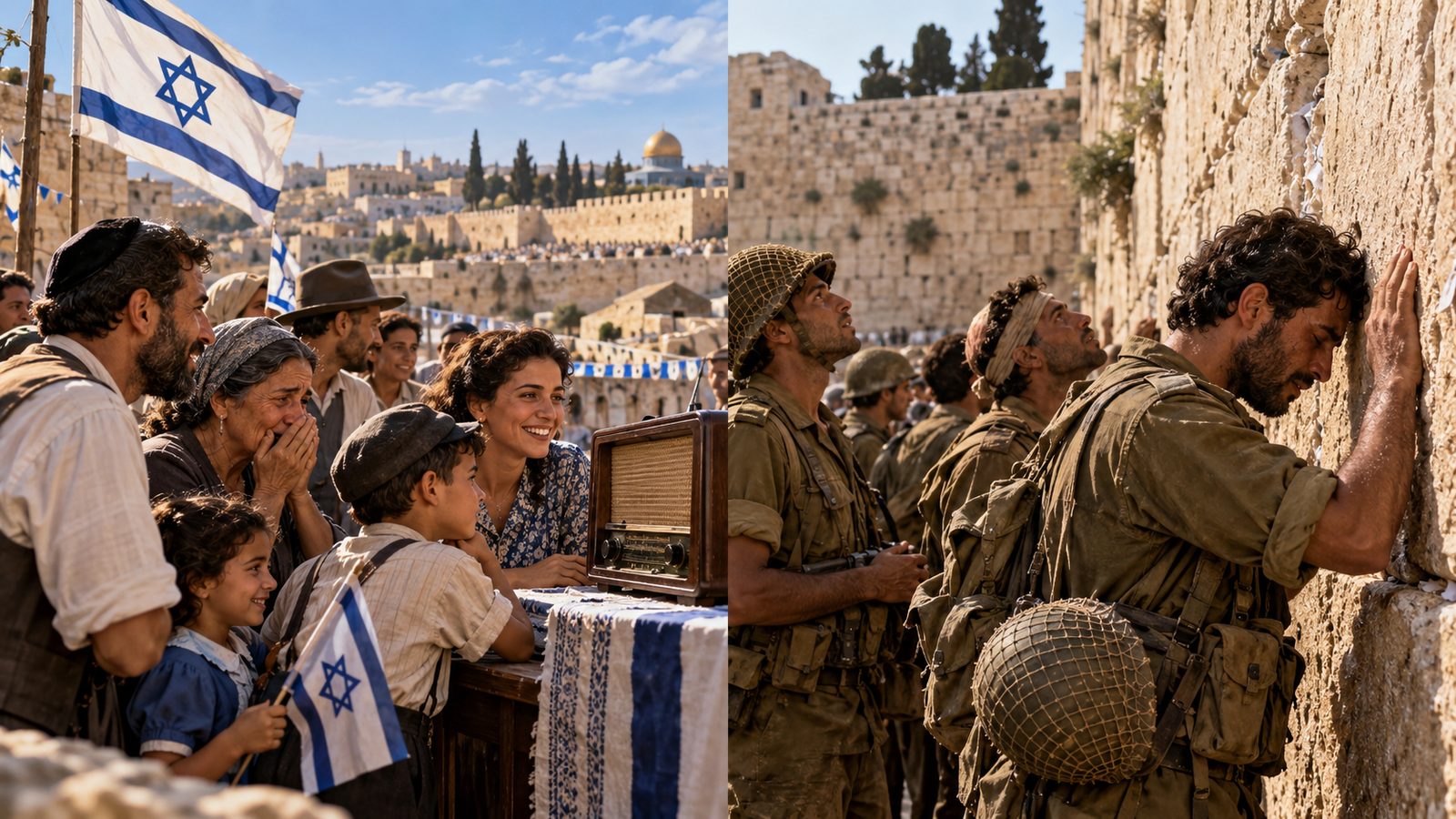
The Suez War follows in 1956. In the Six-Day War of 1967, Israel captures East Jerusalem, including the Old City and Temple Mount, as well as other territories. Jewish access to the Western Wall is restored, while the Temple Mount remains the subject of religious administration, security arrangements, and intense political dispute. In 1973, Egypt and Syria launch the Yom Kippur War. These events demonstrate both Israel’s military resilience and the continuing vulnerability of the region’s peoples. [10, 11]
The decades afterward — War, diplomacy, and unresolved claims
Peace agreements, failed negotiations, uprisings, terrorism, and further wars follow. Jerusalem remains central to Jewish national and religious life and to Palestinian aspirations. Its Christian and Muslim communities also have deep attachments to the city. The biblical importance of Jerusalem does not relieve us of the responsibility to describe living people truthfully or to distinguish civilians from governments and armed organizations.
Since October 7, 2023 — Mass murder, hostages, and regional conflict
The Hamas-led attack on Israel brings mass killing and hostage-taking, followed by devastating war in Gaza and wider confrontation involving Hezbollah and Iran. Reporting has documented severe damage to Hamas and Hezbollah and significant setbacks for Iran’s regional network. Such changes can reshape the strategic environment, but “weakened” does not mean permanently defeated. This remains a developing history, not a completed prophetic timetable. Palestinian civilians are not interchangeable with Hamas, and Iranian civilians are not interchangeable with their government. [12]
Where calls for liberation mean eliminating Israel, expelling Jews, or murdering Jews, the antisemitism must be named and rejected. Where a slogan’s meaning is disputed, evaluate the speaker’s stated aims and actions. Christians must oppose hatred of Jews without surrendering truthfulness, compassion, or the distinction between criticism of a government and hatred of a people.
The city beneath the city
Alongside the wars and political declarations runs another timeline: the uncovering of ancient Jerusalem. Archaeology brings us into contact with the material world in which biblical events took place. Its strength is clearest when we say exactly what a discovery establishes.
The City of David
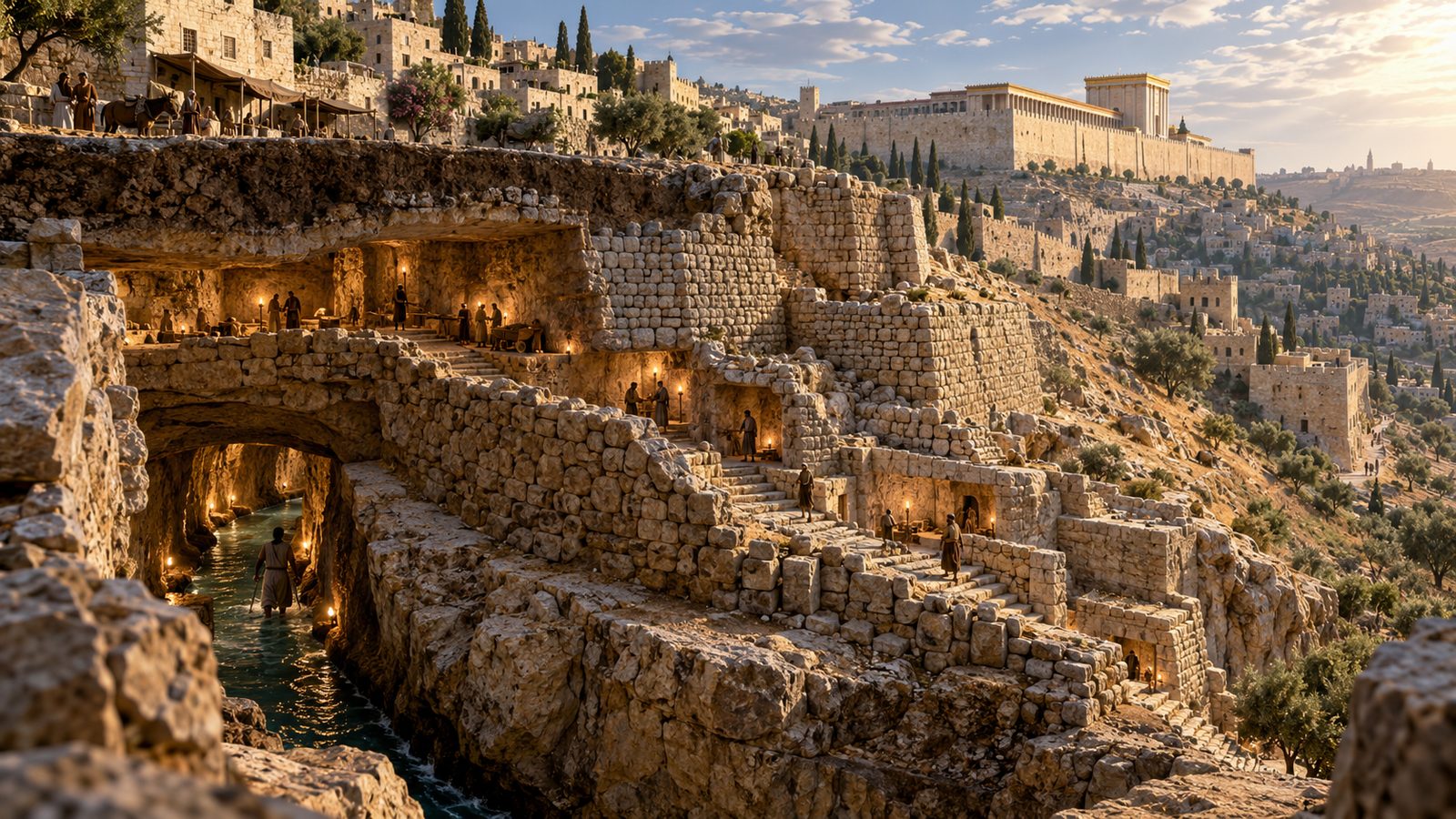
Excavations on the ridge south of the Temple Mount have exposed fortifications, buildings, and water systems from successive periods. Iron Age remains illuminate Jerusalem during the era of the biblical kingdoms. Particular buildings’ identification with specific biblical people can be debated; the evidence should not be reduced either to sweeping proof claims or to blanket dismissal. [13]
2004 — The Second Temple-period Pool of Siloam
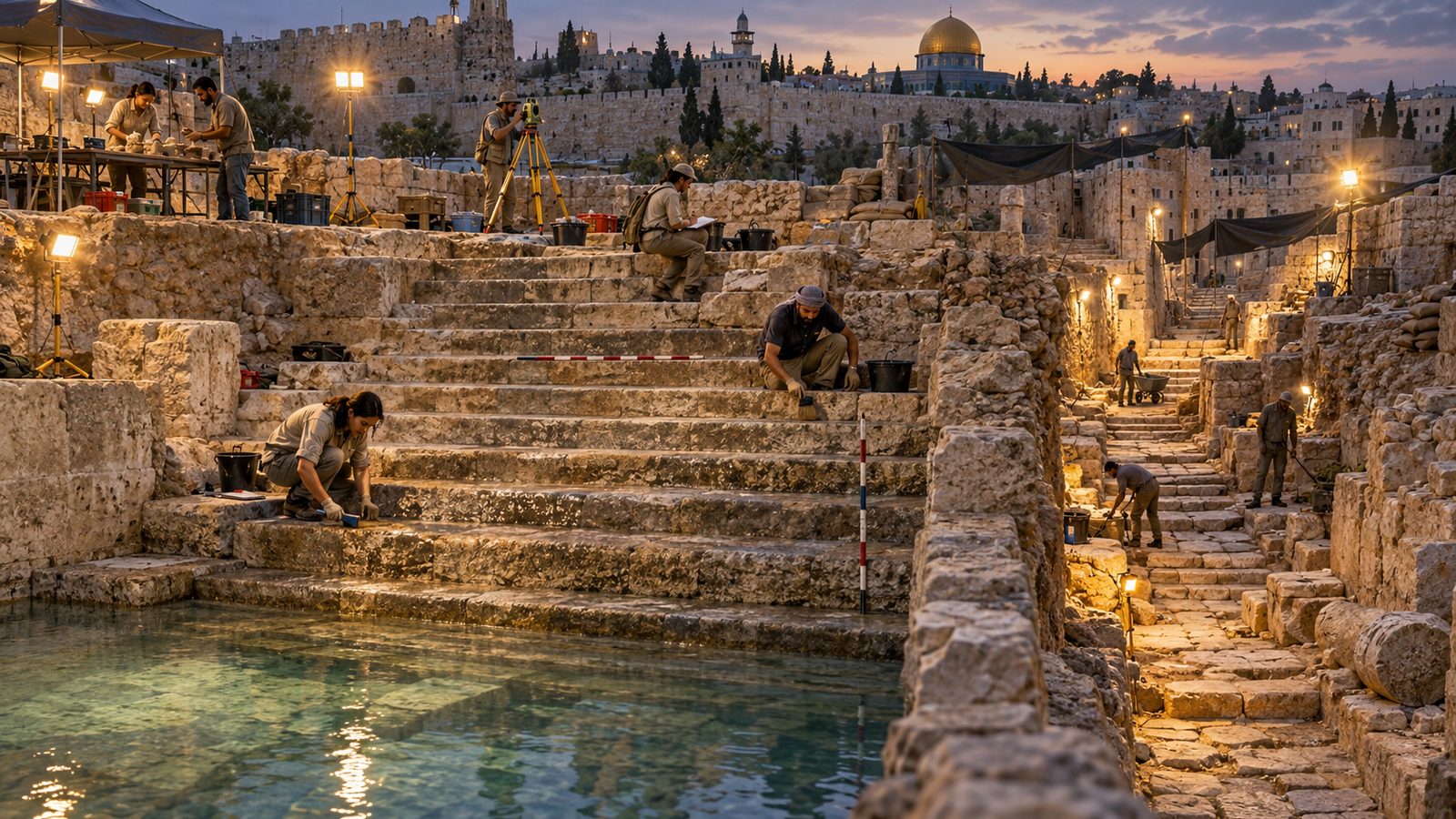
Infrastructure work reveals steps belonging to a substantial ancient pool, leading to excavation of the Second Temple-period Pool of Siloam. The discovery gives concrete historical setting to the pool named in John 9, where Jesus sends the man born blind to wash. Archaeology corroborates the setting; the excavation itself does not demonstrate the miracle. [14]
The stepped street toward the Temple Mount
Excavators uncover long sections of an early Roman-period paved street leading from the Siloam Pool area toward the Temple Mount. This route illuminates the movement of people through the city in the Temple’s final decades. Alongside the Temple Mount’s surviving Herodian-period structures and other evidence, it strengthens our understanding of a city organized around Temple worship. It does not independently locate the Holy of Holies or establish every proposed reconstruction. [15]
A mountain cannot replace the Messiah
The Temple was the appointed place where God met His covenant people and ordered worship and communal life. Jerusalem’s history matters because that story happened in a real land among real people. Yet access to the Father now rests on Jesus’ priesthood and finished sacrifice, not on possession of the mountain (Hebrews 10:19–22). God’s government also reaches beyond the sanctuary. He judges cruelty, demands truth, and holds nations accountable. We cannot honor His prophetic Word while treating the suffering of Jews, Palestinians, or any other people as spiritually unimportant. We pray for Israel’s preservation and salvation, for the protection of civilians, and for the knowledge of Jesus throughout the region.
Temple Prayer Response
Jesus, You are the true Temple and our faithful High Priest. Keep us from forgetting Israel, despising our neighbors, or confusing military power with holiness. Teach us to read history honestly, reject antisemitism, and pray for Jerusalem with understanding. Govern our own lives by Your Word while we watch for the fulfillment of Your promises. Amen.
Ezekiel 37:1–28; John 2:19–22; John 9:1–11; 1 Corinthians 3:16–17; 6:19–20; Ephesians 2:11–22; Romans 11:1–2, 17–29; Psalm 122:6–9; Hebrews 10:19–22; Revelation 2:12–17.